
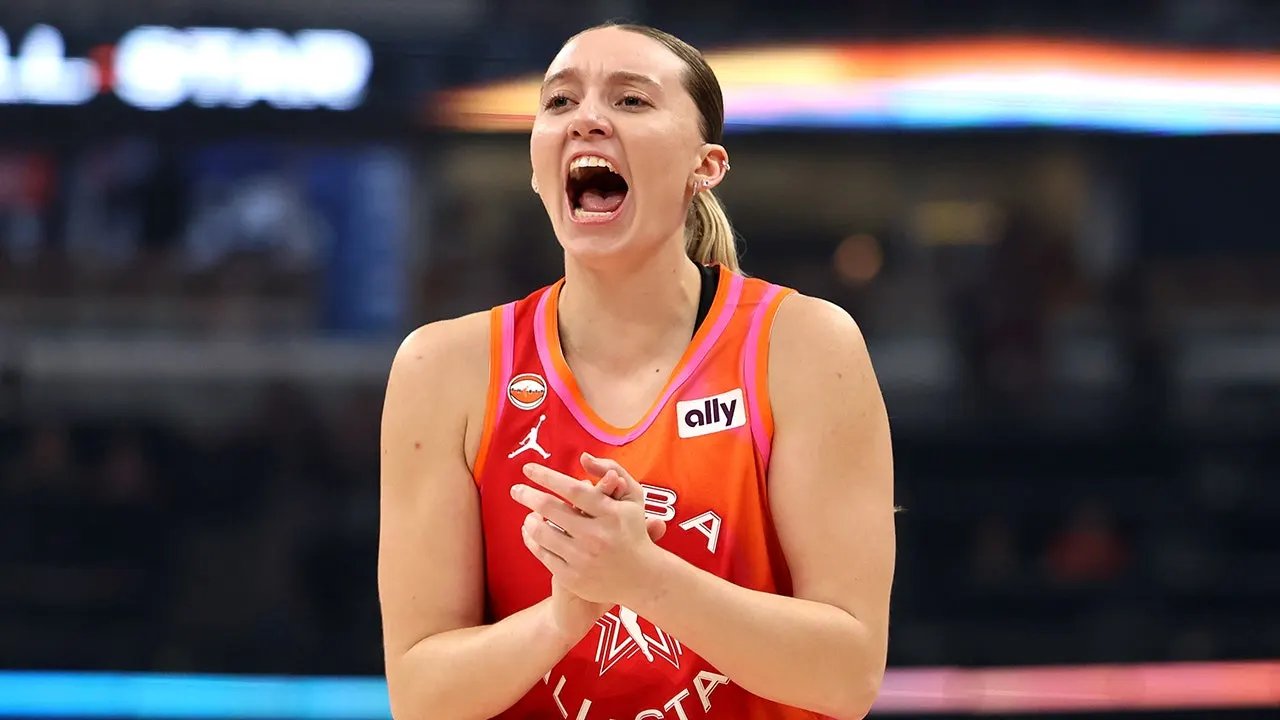
The WNBA Finally Has Stars. Why Is It Fighting Them? | The Riley Gaines Show
Caitlin Clark and Sophie Cunningham are giving the WNBA exactly what every league says it wants: attention, rivalry, ratings, personality, memes, and real fan emotion. So why does the league keep looking uncomfortable with the very energy that is making people watch? On this episode of The Riley Gaines Show, Riley breaks down Clark’s return to elite form, the Fever’s surge, the technical foul controversy, and Sophie Cunningham pushing back on the “enforcer” label. This is not about painting Caitlin Clark as a victim. It is about a bigger question for women’s sports: can the WNBA embrace stars who are intense, competitive, physical, marketable, and unapologetically themselves? From officiating debates to viral moments the league seems hesitant to monetize, Riley argues that women’s sports do not grow by sanitizing rivalry. They grow when athletes are allowed to have edge, personality, loyalty, toughness, and a point of view.
The WNBA finally responded to OutKick’s questions about why USA 250 patches didn’t appear on the players’ uniforms at Saturday’s All-Star Game in Chicago.
It just didn’t actually answer them.
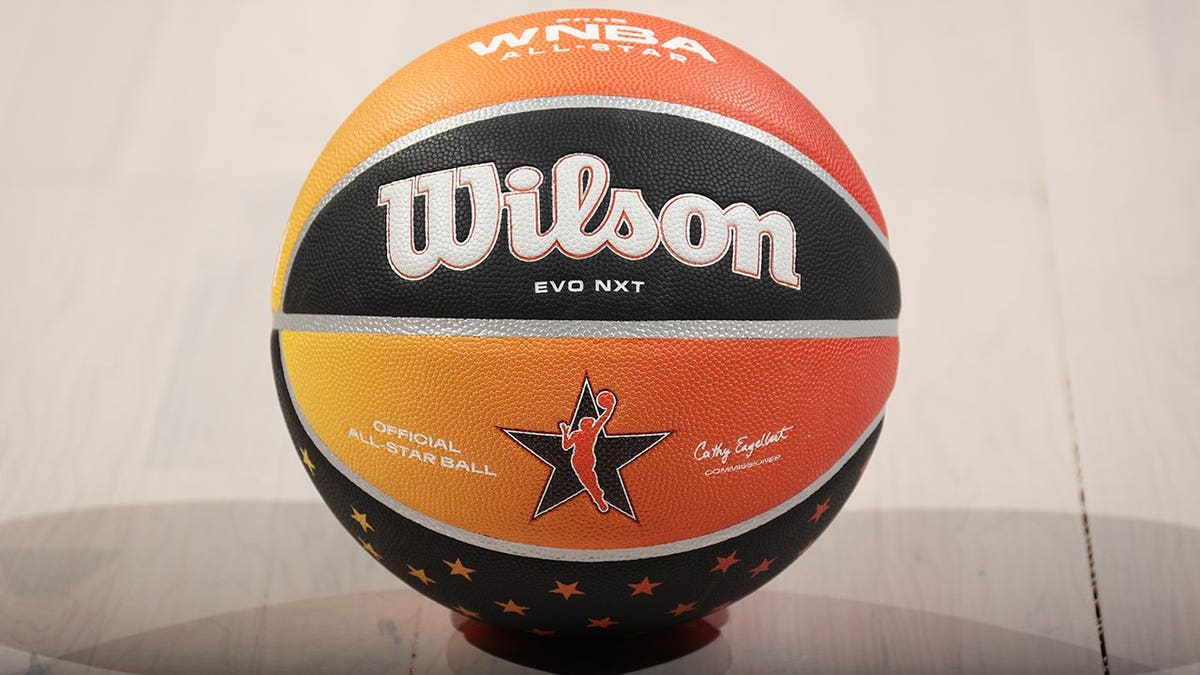
The WNBA issued a statement about the missing USA 250 patches at the All-Star Game but avoided explaining why the planned commemoration was dropped. (Stephen Gosling/NBAE via Getty Images)
A league spokesperson provided a statement Monday after OutKick and Fox News Digital reported that the WNBA Players Association denied asking the league to abandon the uniform-patch plan.
WNBPA SAYS IT DID NOT ASK WNBA TO DROP USA 250 ALL-STAR PATCH AFTER UNION OFFICER PUBLICLY OBJECTED
“As America celebrates its 250th anniversary, the WNBA was proud to honor the service and sacrifice of our nation’s veterans and military families,” the statement read.
“Veterans and military families have long been part of the WNBA community—as players, fans, and league, team, and arena staff. Through All-Star Weekend in Chicago, the league recognized their contributions and helped create meaningful experiences in celebration of this historic milestone.”
Fair enough. But the statement avoided every question the WNBA was asked.
The league didn’t explain why the USA 250 patch that Sportico reported was planned for the All-Star uniforms never appeared. It didn’t say whether public criticism from Las Vegas Aces forward and WNBPA treasurer Brianna Turner influenced the decision, whether any player objected to wearing the patch or who made the final call.
Instead, the WNBA highlighted its tribute to veterans and military families, which wasn’t in dispute.
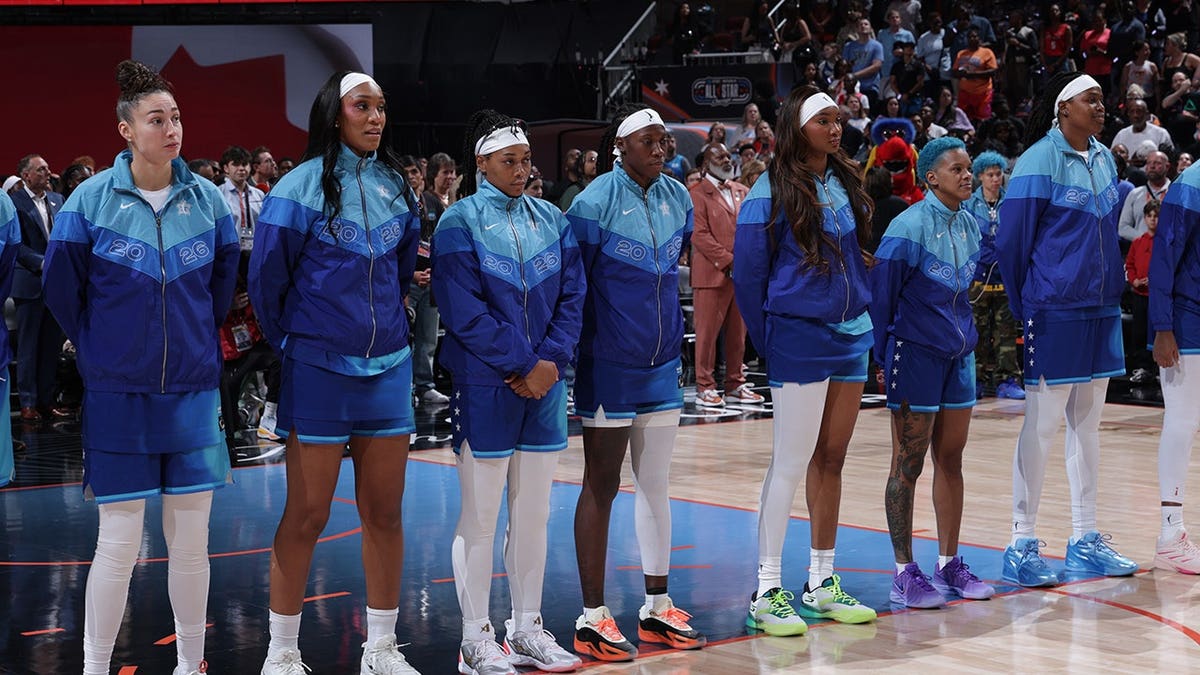
Team Spoon stands for the national anthem before the 2026 WNBA All-Star Game at the United Center in Chicago. (NBAE via Getty Images)
The unanswered questions became more significant after the WNBPA provided its own account of the events leading up to All-Star Weekend.
WNBA COMMISSIONER VOWS TO CRACK DOWN ON ‘RACISM, MISOGYNY,’ DODGES BIG QUESTIONS AT ALL-STAR PRESS CONFERENCE
The union told OutKick and Fox News Digital that members of player leadership contacted the WNBA after seeing reports that the league had decided to place patches commemorating America’s 250th anniversary on the uniforms.
According to the WNBPA, the league told player leaders that no final decision had been made. The WNBA later informed the union that it would instead commemorate the anniversary with “America 250” signage in and around the arenas and by honoring veterans during the All-Star Game.
“The league did not seek union input nor was the matter put before player leadership for action,” the WNBPA said.
That statement undercut claims that the union formally demanded that the patches be removed or held a vote opposing them. It also shifted the focus back to the WNBA. The union says the league made the decision without seeking formal input from player leadership.
So why did it make that decision?
The league’s new statement doesn’t say.
The patches are part of a national America250 initiative that has included the NFL, NBA, NHL, MLB, MLS, NASCAR, UFC and WWE. Every player wore one during the Super Bowl, while NBA players wore the patch throughout the Finals.

During the 2026 NBA Finals, players wore the USA 250 patch on their jerseys. (NBAE via Getty Images)
The WNBA was not included in the initial Fanatics and America250 announcement, but Sportico later reported that the league planned to put the patches on its All-Star uniforms.
That report drew an immediate objection from Turner, an elected member of the WNBPA’s executive leadership.
“Whoever called for the WNBA all star uniforms to have the USA 250 patch should have thought that through considering no WNBA players would have been free 250 years ago,” Turner wrote on social media.
She added that the league’s players are among the most elite female athletes in the world but would have been “breeders or in the fields working all day” in 1776.
“Be so serious rn,” Turner concluded.
Turner’s public objection was followed by questions from union leaders, and the WNBA ultimately didn’t use the patch.
WNBPA president Nneka Ogwumike confirmed before the All-Star Game that players had raised the matter with league leadership.
“As players, we did ask about it,” Ogwumike told reporters. “I think being in a league where you’re able to have that type of conversation with your leadership is important.”
Breanna Stewart, another member of the WNBPA executive committee, was then asked whether the patches would appear on the uniforms.
“No, they’re not on the jerseys,” Stewart said.
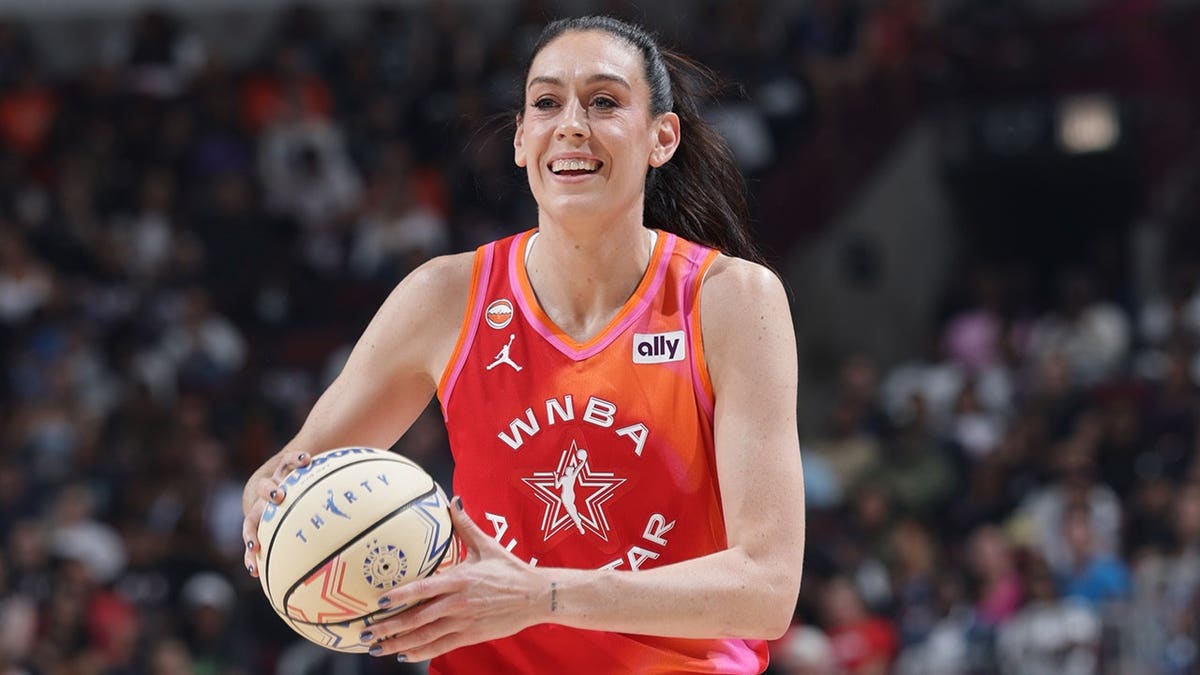
Breanna Stewart plays during the WNBA All-Star Game in Chicago, where USA 250 patches did not appear on player uniforms after league and union discussions. (NBAE via Getty Images)
The union’s subsequent statement says those conversations were limited to seeking information and that player leadership neither provided input nor took formal action.
That leaves several possibilities. The WNBA might have independently decided that arena signage and a veterans tribute were more appropriate than a uniform patch. League executives might have been concerned about potential player objections without receiving a formal union request. Or the initial report might have overstated how close the league was to approving the patch.
Another possibility is that the WNBA made the safest public-relations decision available. If league officials believed even a handful of players might refuse to wear the patch, leaving it on the uniforms risked turning All-Star Weekend into a very public fight over patriotism. Removing it beforehand took that decision out of the players’ hands.
But the league cannot easily admit that. Doing so would mean acknowledging that it expected resistance from its own players and effectively throwing them under the bus. The WNBA may have concluded that quietly absorbing criticism for the missing patch was less damaging than risking players publicly rejecting it.
Any of those explanations is possible.
But the WNBA didn’t provide one, even when pressed.
OutKick and Fox News Digital followed up after receiving the league’s statement and noted that it didn’t address the central questions. The WNBA was again asked why it decided against using the USA 250 patch, whether Turner’s criticism or opposition from any player influenced the decision, and who made the final call.
The league didn’t provide an additional response.
It is worth recognizing what the league did during All-Star Weekend. Honoring veterans and military families is admirable, and the WNBA deserves credit for doing it. Using America 250 signage establishes that the league was not refusing to acknowledge the anniversary altogether.
But neither point explains why the league reportedly considered joining other major sports organizations in placing the USA 250 commemoration directly on its uniforms and then chose not to do so.
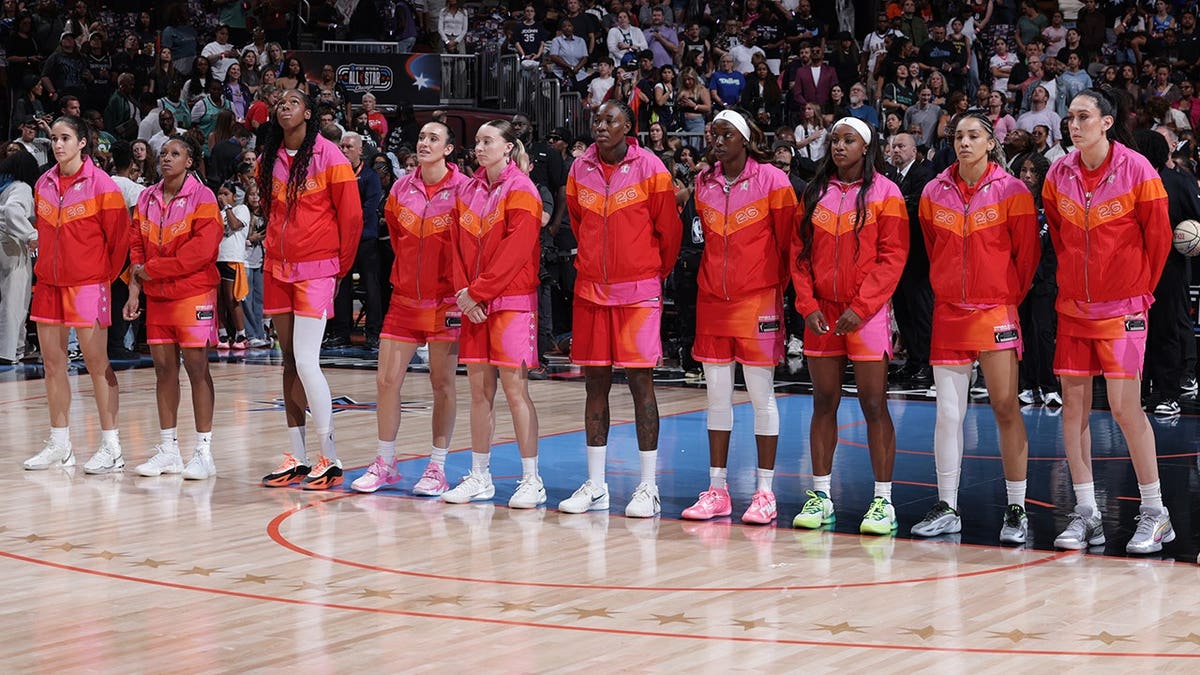
Team Coop stands for the national anthem before the 2026 WNBA All-Star Game at the United Center in Chicago. (NBAE via Getty Images)
The patch did not endorse a political candidate or require players to approve of every chapter of American history. It was a basic acknowledgment of the country’s founding and the freedoms that allow women to earn a living playing professional basketball, organize through a powerful labor union and publicly criticize both their employer and their country.
SOPHIE CUNNINGHAM SPEAKS OUT TO PROTECT GIRLS AS WNBA ALL-STAR INITIATIVE BACKS ‘GENDER-EXPANSIVE’ GROUP
Turner is free to believe that America’s history makes the patch inappropriate. Other players are free to agree with her.
Fans are free to disagree.
What the public still doesn’t know is whether those views had anything to do with the WNBA’s decision.
The WNBPA has answered for itself. It says player leaders sought information, offered no input and were never asked to take action.
The WNBA has now responded, too.
It just hasn’t answered the questions it was asked.
CLICK HERE TO DOWNLOAD THE FOX NEWS APP