NEWYou can now listen to Fox News articles!
Democrats are fighting to stop the Trump administration’s attempt to get 146,000 homeless people with serious mental illness the help they need.
In late July, House and Senate Democrats launched an inquiry accusing the Trump administration of wanting to “return to a time when people with disabilities were denied basic civil rights.” But there’s one problem: the system these Democrats are defending is the reason there are so many mentally ill people living in squalor on America’s streets.
Until recently, when it came to helping the mentally ill homeless, states had their hands tied. For decades, government lawyers interpreted the Supreme Court’s 1999 Olmstead decision extremely broadly, pushing states to offer “community-based care.”
HOUSING FIRST IS A DISASTER. I SAW SACRAMENTO’S HOMELESS CHAOS FIRSTHAND
For the seriously mentally ill, this meant independent living in single units where mental health and substance abuse treatment was optional – and often refused. In June, the Department of Justice released a controversial legal opinion that would fix this by revamping federal oversight of state mental healthcare.
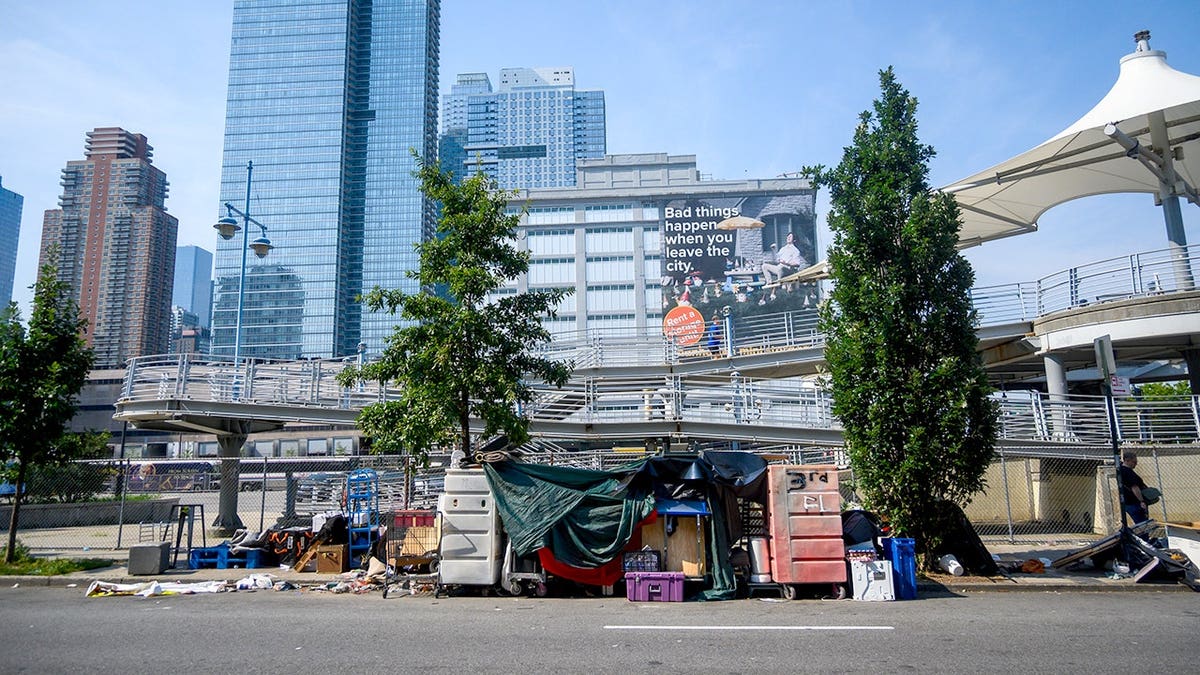
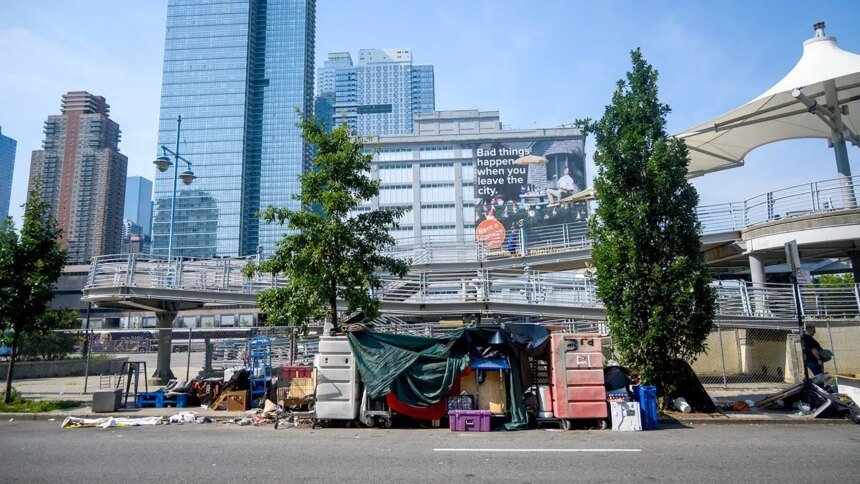
A view of a homeless encampment near the Intrepid Museum in New York, N.Y., on July 15, 2026. (John M. Taggart/Fox News Digital)
The Trump administration’s new framework allows states to offer small-scale, affordable supportive housing options, such as community-based group homes, that would provide court-ordered treatment to people (often homeless) who are disabled by mental illness or substance abuse issues.
Intermediate housing options like this have historically been difficult to establish and maintain because of unrealistic regulations that put resident autonomy above safety and clinical need, preventing states from building a middle ground between hospitalization and community-based care. For the first time in three decades, states may finally be able to meet this crucial but ignored need.
The administration’s new approach would not involve a reversion to large state psychiatric hospitals, which offer few opportunities for federal reimbursement and, at an average cost of $1,400 per patient, per day, are too expensive to rely on except when truly necessary.
SEATTLE CLEANED UP FOR THE WORLD CUP BUT ONLY WHILE THE WORLD WAS WATCHING, COMMENTATOR SAYS
But even so, activist groups claim that this shift “open[s] the doors for states to revert to warehousing people,” evoking the dark imagery of midcentury American asylums. This is fearmongering, plain and simple. It conveniently ignores the squalid conditions — and public safety risks — created by the current system, which too often “warehouses” homeless people in dangerous outdoor encampments.
As anyone who has walked the streets of an American city knows, mental illness and addiction among the homeless are urgent problems. Tens of thousands of Americans with serious mental disorders, severe substance-use disorders, or both live outside, where they pose a danger to themselves and the public.
They face high levels of victimization, crime, disease, and premature mortality. They are also the most likely of all homeless subpopulations to resist outreach, because of the effect of severe mental illness on brain function and reasoning.
This catastrophe of homeless mental illness is decades in the making. Since 1992, the federal government has asserted unprecedented authority over state behavioral health systems. Through federal regulations and the landmark Olmstead case, states have been forced to focus their resources disproportionately on voluntary mental healthcare in communities.
KAREN BASS GRILLED OVER BROKEN HOMELESSNESS PROMISE, BLAMES BUREAUCRACY FOR SLOWED PROGRESS
This form of care is important, but it is also the least appropriate form of care for the most severely mentally ill who require a level of daily structure and support that is incompatible with living isolated in single-occupancy units in the community.
The administration’s new approach would not involve a reversion to large state psychiatric hospitals, which offer few opportunities for federal reimbursement and, at an average cost of $1,400 per patient, per day, are too expensive to rely on except when truly necessary.
As a result, states have faced a difficult choice: they can comply with federal law and neglect the most seriously ill patients in their care, or provide the necessary care and risk federal litigation. After decades of choosing the latter and losing in court, most states now choose the former.
Before the DOJ’s recent memo, the risk of federal litigation was so great that states created so-called “Olmstead Plans” that set benchmarks for reducing the populations of state psychiatric hospitals, regardless of whether this was appropriate with respect to patient well-being and public safety.
As a result, since 1990, states have eliminated tens of thousands of psychiatric hospital beds. By 2016, fewer than 38,000 beds remained nationwide – a 96% decrease compared to the 1950s – even as the U.S. population grew by 110%.
SEATTLE MAYOR REFUSES TO GRADE HERSELF AS CRIME, HOMELESSNESS SURGE
This trend was amplified by state-level watchdogs, known as protection and advocacy agencies, that historically focused on investigating abuse and neglect in psychiatric institutions, but now focus primarily on pressuring hospitals to release patients under threat of litigation. Tragically, tens of thousands of these patients end up homeless or in the criminal justice system due to premature or inappropriate release.
Even at the time of the Olmstead ruling, Justices Anthony Kennedy and Stephen Breyer foresaw this concerning possibility, which has since come to pass. As Kennedy wrote in his Olmstead concurrence, quoting Justice Ruth Bader Ginsburg: “It is careful, and quite correct, to say that it is not ‘the ADA’s mission to drive States to move institutionalized patients into an inappropriate setting, such as a homeless shelter.’”
Federal policies may have “liberated” them from psychiatric hospitals, but those same policies now banish them to conditions that rival the poorest places in the world.
CLICK HERE FOR MORE FOX NEWS OPINION
The history of institutional abuse in this country is real, and the vigilance of earlier generations of disability rights advocates helped end some of its worst practices. But learning from the mistakes of the past shouldn’t mean ignoring the evidence of the present: the current system, built to prevent one form of harm, has left tens of thousands to face worsening illnesses, unsheltered and untreated on the street.
CLICK HERE TO DOWNLOAD THE FOX NEWS APP
The Trump administration is right to revisit federal regulations in light of that evidence. The tragedy is not that these changes are coming — it’s that they took so long.