
NEWYou can now listen to Fox News articles!
President Donald Trump later today will meet with President Xi Jinping in China, where the pair are expected to discuss trade between the two nations after what one expert describes as years of broad promises but few executed deals.
Tariffs, agricultural purchases and rare earth minerals are all potential topics of conversation, and are in many ways intertwined, according to Ryan Yonk, an economic scholar and research fellow at the American Institute for Economic Research who specializes in relations between the United States and China.
At a summit in Beijing in May, China agreed to purchase 25 million metric tons of American soybeans annually, one of its U.S. largest imports. China also agreed to purchase $17 billion worth of other agricultural products this year, in 2027 and in 2028.
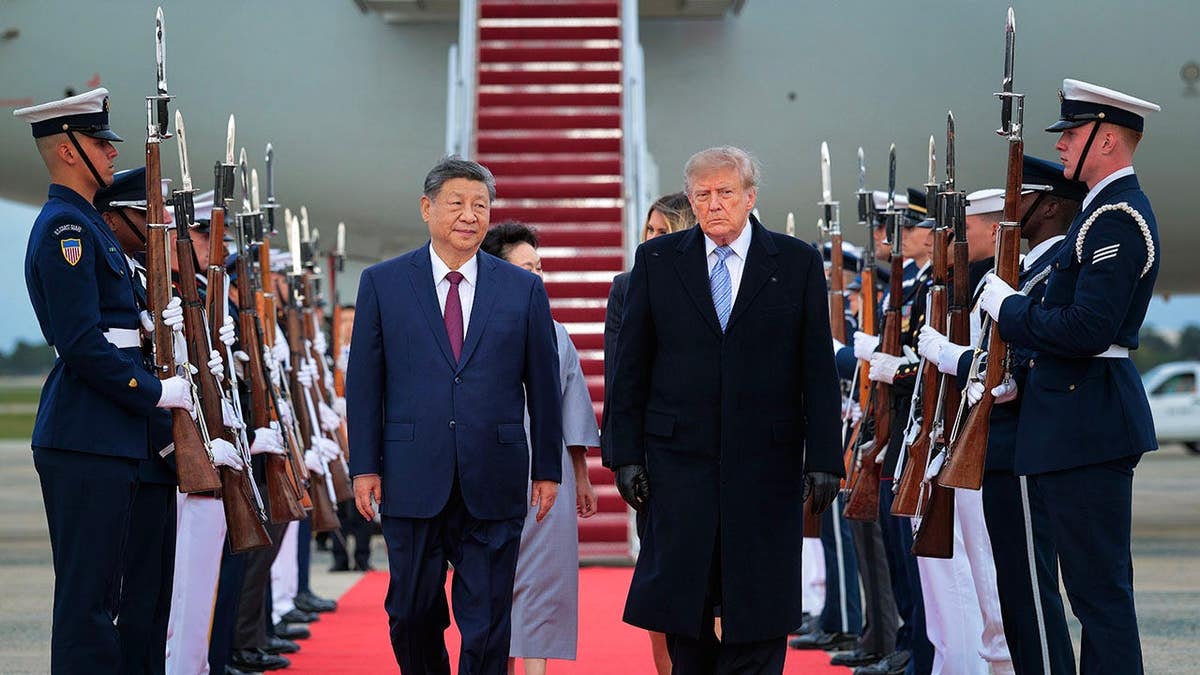
President Donald Trump walks on a red carpet after greeting Chinese President Xi Jinping during an arrival ceremony at Joint Base Andrews, Md., on Sept. 23, 2026. Trump is hosting Xi for a three-day state visit to Washington, D.C., where the leaders are expected to discuss trade practices, artificial intelligence and furthering “strategic stability” between their countries. (Getty Images)
TRUMP HEADS TO BEIJING FOR HIGH-STAKES XI TALKS AS TAIWAN TENSIONS, TRADE DISPUTES TEST US STRENGTH
“There has been a very sort of large scale discussion, particularly about soy purchases from U.S. Producers that got derailed as the tariff debate and argument increased across time,” Yonk said.
Those purchases, Yonk said, were widely believed to be one area where China would make the first move in purchasing U.S. products given the current tariff arrangement, in large part because China simply lacks the domestic capability to produce soy at the quantity it needs.
When Xi visited the U.S. in September, Treasury Secretary Scott Bessent announced that the two countries had agreed to extend a tariff truce and reduce restrictions on trade for certain products until January.
They left the door open to hammer out a more permanent deal during Trump’s visit to China Wednesday.
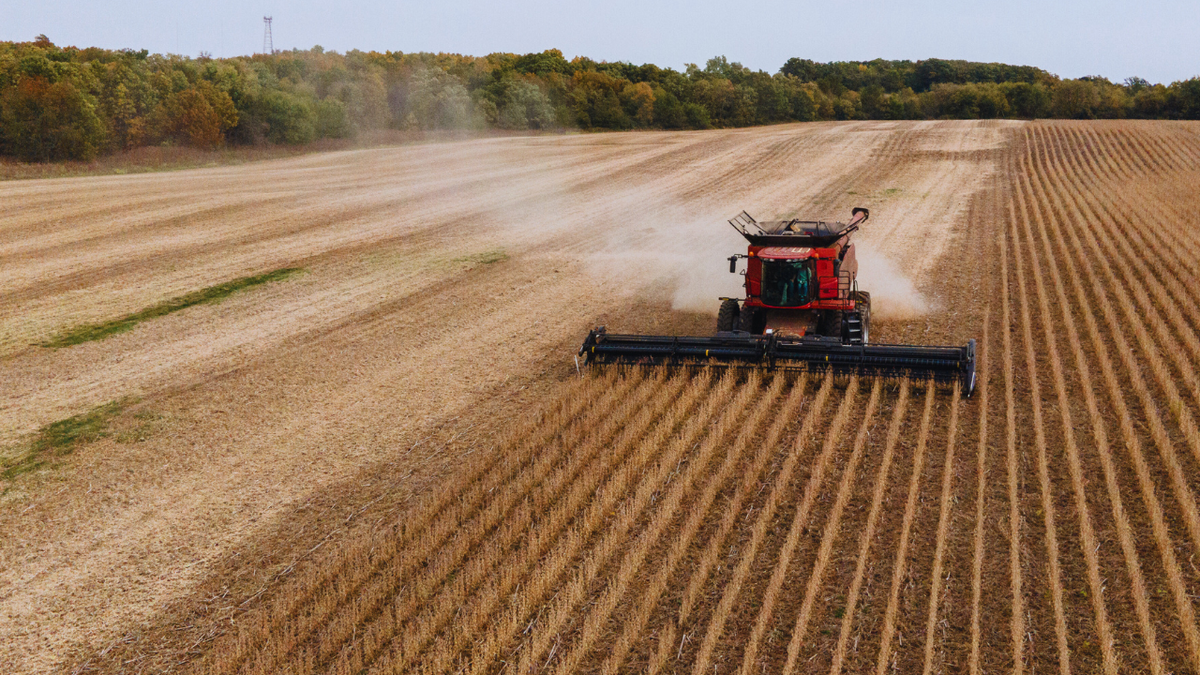
A combine harvester during a soybean harvest at a farm in Harvard, Illinois, Oct. 17, 2025. (Christopher Dilts/Bloomberg/Getty Images)
Yonk thinks that without a “fundamental rebalancing of the trade agreements on both sides,” China will not act first in making large scale purchases from the United States.
WHAT XI WANTS FROM TRUMP AS BEIJING SEEKS LEVERAGE IN HIGH-STAKES SUMMIT
” I think is unrealistic, because an expectation that China will act first with very little reciprocal action on the U.S. Side isn’t traditionally how China has acted,” he said.
That calculation is not just economic, but political, Yonk explained. Neither Trump nor Xi wants to act first, for fear of the appearance that one is giving into the other.
He is not confident that high-level talks between the two world leaders will lead to concrete change in trade policy.
“And so if we’re going to get real progress, it’s going to likely have to be not simply between the two leaders meeting and agreeing, but actual trade negotiations that involve sub-cabinets, officials actually going through and identifying what specific restrictions can be lowered,” he said, adding that those tactics have not yet been employed in a meaningful way between the two nations.
DOUG BURGUM SAYS TRUMP ENTERS CHINA SUMMIT IN ‘STRONGEST POSITION’ OF ANY US LEADER EVER
Trump already vowed on Tuesday to break China’s grip on rare earth minerals, which are used to build everything from fighter jets to cell phones.
“We’re doing very well,” Trump said. “We’re making rare earth at a level that we’ve never made before. We’re going to catch [China] within 10 months, they say. We’ll catch them. Everything we need we’ll have in 10 months.”

U.S. President Donald Trump and Chinese President Xi Jinping attend a bilateral meeting at the Great Hall of the People on May 14, 2026 in Beijing, China. President Trump is meeting with President Xi Jinping in Beijing to address the Iran conflict, trade imbalances, and the Taiwan situation while establishing new bilateral boards for economic and AI oversight. (Alex Wong/Getty Images)
AMERICA DEPENDS TOO MUCH ON CHINA FOR ESSENTIAL MINERALS. WE NEED TO DIG OUR FUTURE
Yonk said the U.S. does have a large supply of rare earth minerals available within its borders. But it is more cautious of the environmental concerns that come along with mining and refining them than China. Thus, China has been a major source of America’s rare earth minerals.
China is experiencing economic pain that keeps it coming back to the negotiating table, Yonk said, noting that the U.S. has its own share of pain with high levels of inflation. But ultimately, he surmised, China is worse off than the United States, using the analogy that if the United States catches a cold, China will catch a “fairly severe flu.”
“And so the stakes are very high for China getting the trade arrangements right. It pushes us back into, if we’re going make real progress, it’s going be often item by item,” he said. “It’s going to trade line by trade line and understanding what those bilateral trade agreements can really look like.”
CLICK HERE TO DOWNLOAD THE FOX NEWS APP
“It always sounds good to say we’re going to solve it all at once, but most of the trade agreements we’ve had with China that have succeeded have been line by line, product area by product area, and it requires a holistic look at the relationship rather than mere platitudes.”