- How SignalTrace device tracking works
- What SignalTrace actually collects
- Why a nameless signal can still reveal plenty
- Proximity can reveal who you spend time with
- Is SignalTrace already being used by police?
- The Supreme Court just changed the location privacy debate
- Why this could matter at a protest or public gathering
- What you can do about this kind of tracking
- 1) Turn off Bluetooth when you are not using it
- 2) Review which apps can access your location
- 3) Check how license plate readers are used where you live
- What this means to you
- Kurt’s key takeaways
Your phone may be giving a roadside sensor clues about where you go and which devices regularly travel alongside you. Say you carpool to work with the same person most mornings. Your car passes a license plate reader, which records the plate along with the time and location. Meanwhile, another sensor detects wireless signals coming from devices traveling nearby. Your phone might be there. So could a smartwatch, wireless headphones or electronics built into the car.
After enough trips, software may recognize that some of those signals tend to move together. Now there is a recurring electronic pattern associated with that vehicle. Weeks later, one of those signals appears somewhere else, perhaps near a different vehicle connected to an investigation. Police may not know who owns the device yet. However, its previous connections could give investigators a place to start.
LICENSE PLATE CAMERAS ARE TRACKING DRIVERS EVERYWHERE
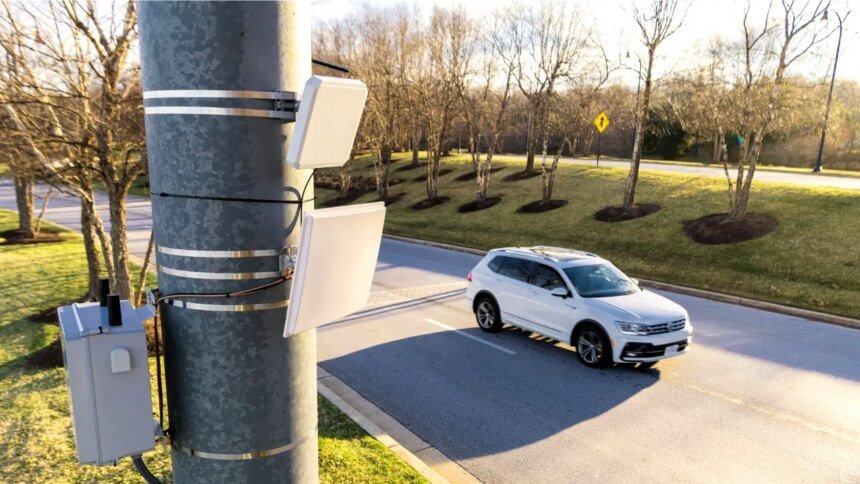
SignalTrace links wireless signals from phones, wearables and other devices with license plate reader data to identify recurring travel patterns. (Jim Craige for LDOUSCSS)
That is the idea behind SignalTrace, a technology marketed to law enforcement by security company Leonardo. And it raises a big privacy question: How anonymous is a device signal once it can be tied to a vehicle, repeated locations and other devices traveling alongside it?
New! Free live CyberGuy class: Protect Your Money From Today’s Biggest Threats
Join us Saturday, August 29, at 10 AM ET for a free CyberGuy LIVE class covering five simple steps to help defend yourself against AI scams, fraud, identity theft and financial hacks. Kurt “CyberGuy” Knutsson will explain how to set up bank alerts, strengthen your account logins, protect your phone number, freeze your credit and help secure your retirement savings against unauthorized transfers. No technical experience is needed. You’ll also receive our financial protection checklist, and every registrant will get a link to the class recording afterward.
Reserve your free spot today at CyberGuyLive.com.
How SignalTrace device tracking works
SignalTrace works alongside automatic license plate reader technology, commonly called ALPR. Traditional license plate readers photograph passing vehicles. They can record the plate number, vehicle information and the time and location of the sighting. We recently looked at how license plate cameras are tracking drivers across the country. SignalTrace adds another layer.
Leonardo says the system detects electronic signals being broadcast by consumer devices. That can include signals associated with phones, wearables, vehicle electronics and RFID devices. The software looks for signals that repeatedly appear together. It can then create what Leonardo calls an electronic fingerprint for that group.
According to the company’s product information, SignalTrace can connect recurring device patterns with license plate information and time-stamped locations. Investigators can later search those patterns. Leonardo also says the technology can help recognize a vehicle even when its license plate isn’t visible. That changes the starting point for an investigation. Police traditionally might begin with a plate number or known suspect. With this type of system, investigators could potentially begin with a recurring pattern of electronic signals and work backward.
What SignalTrace actually collects
Leonardo told CyberGuy, “Leonardo recognizes that technologies used to support public safety must balance investigative value with the privacy rights of individuals. SignalTrace was designed with that responsibility in mind.” According to the company, SignalTrace detects and correlates electronic signals that devices publicly broadcast. Leonardo says the system does not decrypt communications, access message content or collect information stored on someone’s device.
The company also stressed that SignalTrace itself does not identify individuals or associate an electronic signature with a person. However, Leonardo confirmed that an investigator could correlate an electronic signature with a license plate. The investigator could then, subject to applicable laws and policies, use outside vehicle registration records to obtain information about the registered owner. In other words, any identification would come from separate investigative steps and outside records, not from SignalTrace itself. The registered owner of a vehicle also isn’t necessarily the person who was carrying a particular device at a particular time.
Leonardo told CyberGuy, “SignalTrace data is an investigative lead, not proof of identity.” The company added that the data “should not be considered proof of an individual’s identity or involvement in an incident.” Any association with a person, Leonardo says, requires additional investigative work and corroborating information under applicable legal requirements and agency procedures. The company summed up its position this way: “Leonardo believes technology should support, not replace, sound investigative practices.”
Why a nameless signal can still reveal plenty
This is where the privacy debate gets more interesting. Federal privacy guidance does not define identifying information only as your name, Social Security number or another obvious identifier. The National Institute of Standards and Technology says information can qualify as personally identifiable when it can distinguish or trace someone’s identity on its own or when combined with other linkable information. Movement patterns can be surprisingly revealing.
A widely cited Scientific Reports study examined 15 months of mobility data from 1.5 million people. Researchers found that four time-and-place points were enough to uniquely characterize 95% of the mobility traces in the dataset. That study did not examine SignalTrace. Still, it demonstrates why repeated location patterns can become distinctive even when a person’s name is missing from the original data.
That is important because data that appears anonymous on its own can become identifying when combined with outside information. Connect that data with a vehicle record, another location and repeated appearances over time, and investigators may have a much clearer picture.
Proximity can reveal who you spend time with
Location is only part of the concern. Association matters too. Your phone regularly travels beside certain other devices. Your spouse’s watch may be nearby. A coworker’s phone could appear during your commute. Your child’s tablet might show up during family trips. Those patterns can say something about relationships.
A Proceedings of the National Academy of Sciences study followed 94 participants using phones that recorded Bluetooth proximity and communication patterns. Researchers reported that the behavioral data could accurately classify 95% of reciprocally reported friendships in their sample. Again, SignalTrace uses a different system. There is no independent research showing that SignalTrace can reproduce those results. The broader lesson still matters. Repeated proximity can reveal social relationships. That can also create mistakes.
Two people may commute together without having any other connection. Someone can borrow a car. A phone may stay inside a vehicle after its owner leaves. A nearby pedestrian could potentially be close enough to a collection point to become part of the data. A pattern can create an investigative lead. It cannot explain why two people were near each other. We have already seen what can happen when surveillance data points investigators in the wrong direction. In another case, technology helped lead police to accuse the wrong person.
FLOCK SURVEILLANCE SPREADS ACROSS THE SOUTH AS RED-STATE LAWMAKERS SEEK TO AX ‘1984’-STYLE TRACKING TOOLS

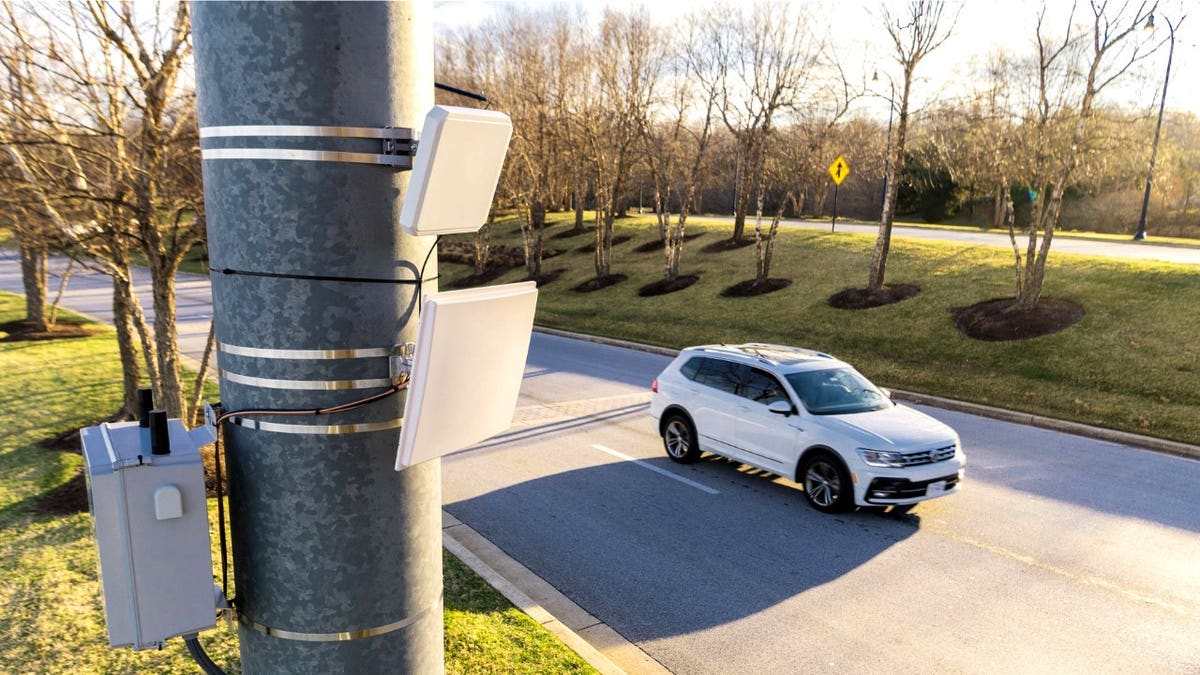
Wireless signals from phones, smartwatches and vehicle electronics can create patterns that reveal movement and recurring associations. (iStock/Getty Images)
Is SignalTrace already being used by police?
Leonardo told CyberGuy that SignalTrace remains in the early stages of adoption and currently has a limited number of deployments. The company did not provide an exact number of agencies or locations using the technology. Leonardo also said interest is growing beyond law enforcement. The company pointed to potential uses involving parking management, traffic monitoring and commercial automotive applications.
The Supreme Court just changed the location privacy debate
The legal questions surrounding this technology arrive at an especially interesting moment. In 2018, the Supreme Court ruled in Carpenter v. United States that people have a reasonable expectation of privacy in historical cellphone location records held by wireless carriers.
Then came a major ruling this summer. In June 2026, the Supreme Court decided Chatrie v. United States, a case involving location information obtained through a geofence warrant. Police investigating a bank robbery had obtained Google location data associated with devices near the crime scene. Investigators narrowed the data until it helped lead them to Okello Chatrie.
The Supreme Court held that police conducted a Fourth Amendment search when they obtained Chatrie’s cellphone location data from Google. The justices said people can have a reasonable expectation of privacy in cellphone location information. The court did not decide whether the particular geofence warrant ultimately satisfied the Fourth Amendment’s probable cause and particularity requirements. It sent that issue back to the lower court.
That distinction is important for SignalTrace. Chatrie involved historical location information stored by Google. SignalTrace detects signals broadcast from nearby devices. The Supreme Court has not ruled that SignalTrace collection itself constitutes a Fourth Amendment search. Still, the cases now sit in the same broader privacy conversation. Police technology can begin with devices rather than named suspects. Investigators can then use digital patterns to narrow down the people connected to them.
Why this could matter at a protest or public gathering
Consider a protest, political event or other large public gathering where SignalTrace sensors were operating nearby. A device could appear repeatedly near devices associated with people police are investigating. That proximity would not prove the device owner knew those people. It certainly would not prove wrongdoing. Yet the pattern could become an investigative lead.
Software can recognize recurring signals and proximity. It cannot determine why two people were close to each other. They could be coworkers sharing a ride or strangers who happened to be standing nearby. That distinction becomes especially important because Leonardo itself says SignalTrace data is an investigative lead, not proof of an individual’s identity or involvement in an incident. Any conclusion about a person would require additional investigative work and corroboration.
Automated license plate readers have already expanded beyond traditional police installations. CyberGuy reported that license plate cameras have appeared at some Home Depot and Lowe’s locations, showing how vehicle tracking infrastructure can spread into everyday places. Adding electronic signal analysis could make those networks capable of producing a much richer picture of movement.
What you can do about this kind of tracking
There is no phone setting that guarantees SignalTrace or another roadside sensor cannot detect your device. However, you can reduce some wireless activity and limit other forms of location tracking on your phone.
1) Turn off Bluetooth when you are not using it
If you do not need Bluetooth during a drive, you can turn it off completely. Keep in mind that doing this will disconnect devices such as wireless headphones, your smartwatch or your car’s Bluetooth system.
- iPhone: Open Settings > Bluetooth > turn Bluetooth off. If you want Bluetooth completely disabled, use Settings rather than the Bluetooth button in Control Center. Apple says the Control Center button disconnects Bluetooth accessories without fully turning Bluetooth off.
- Samsung Galaxy: Open Settings > Connections > Bluetooth > turn Bluetooth off. (Settings may vary depending on your Android’s manufacturer).
2) Review which apps can access your location
Limiting location access will not necessarily prevent SignalTrace from detecting a wireless signal. However, it can reduce the amount of separate location information apps collect about where you go.
- iPhone: Open Settings > Privacy & Security > Location Services > select an app > choose the level of location access you want. You can also turn Precise Location off for apps that do not need your exact location.
- Samsung Galaxy: Open Settings > Location > App permissions > select an app > choose the level of access you want. You can also turn off Use precise location for apps that do not need your exact location. (Settings may vary depending on your Android’s manufacturer).
3) Check how license plate readers are used where you live
Find out whether your local police department uses automatic license plate readers and whether it publishes a policy explaining how the data is handled. Look for information about retention periods, access and sharing with other agencies.
These steps can reduce some of your digital exposure, but they cannot make your phone invisible to every type of roadside sensor. SignalTrace can involve more than Bluetooth, so you should be skeptical of any claim that one phone setting can completely prevent this kind of tracking.
THE SURVEILLANCE CAMERA ON YOUR STREET CORNER: LAWFUL SPYING OR CONSTITUTIONALLY PROBLEMATIC?
What this means to you
You do not need to panic every time Bluetooth is turned on in your car. Leonardo says SignalTrace is still in the early stages of adoption, with a limited number of deployments to date. However, the technology changes what you should understand about digital privacy.
A device identifier does not have to contain your name to become useful in an investigation. Leonardo says SignalTrace itself does not identify people, but investigators can combine an electronic signature with outside information, such as license plate and vehicle registration records. That extra context can potentially help investigators narrow down who may be associated with a device or vehicle.

SignalTrace raises privacy questions about how anonymous device signals remain when combined with vehicle records and location data.
You should also review how much location history your apps and accounts retain. That information is separate from SignalTrace collection, but Chatrie demonstrates how valuable stored location histories can become during an investigation. Finally, pay attention to what your local police department says about automated license plate readers. Look for policies covering retention, data sharing and investigative access. If electronic signal sensors become part of those systems, the rules governing them deserve the same scrutiny.
Kurt’s key takeaways
What stands out to me is how quickly the definition of identification is changing. A sensor may never learn your name when you drive past. Yet software can build a pattern around the devices you carry, and investigators can compare that pattern with information from other sources. Leonardo makes an important distinction here. The company says SignalTrace itself does not identify people and its data should be viewed as an investigative lead, not proof. I think that distinction matters. The real privacy question becomes what happens after that lead is created and how much corroboration investigators require before connecting it to a person. I understand why police would want technology that helps find a stolen vehicle or develop a lead in a serious case. These tools can have legitimate public-safety uses. But proximity deserves caution. Being near someone isn’t the same as knowing that person. Traveling with someone does not establish what either person was doing. The bigger question is how much inference we are willing to let technology make before stronger legal protections kick in.
Would you be comfortable with police using electronic signatures from your devices to develop leads about your movements and associations, or should that kind of tracking require a warrant? Let us know by writing to us at Cyberguy.com
Sign up for my FREE CyberGuy Report
- Get my best tech tips, urgent security alerts and exclusive deals delivered straight to your inbox.
- For simple, real-world ways to spot scams early and stay protected, visit CyberGuy.com – trusted by millions who watch CyberGuy on TV daily.
- Plus, you’ll get instant access to my Ultimate Scam Survival Guide free when you join.
CLICK HERE TO DOWNLOAD THE FOX NEWS APP
Copyright 2026 CyberGuy.com. All rights reserved.