The NFL continues to make a concerted effort for safe play for all players, especially when it comes to head injuries.
But since chronic traumatic encephalopathy, better known as CTE, was found to be heavily linked to former professional football players, there has been ongoing discussion about how current and future NFL players could be affected.
New data published in The BMJ from a recent six-year research period provided some harrowing discoveries.
ZERO BS. JUST DAKICH. TAKE THE DON’T @ ME PODCAST ON THE ROAD. DOWNLOAD NOW!
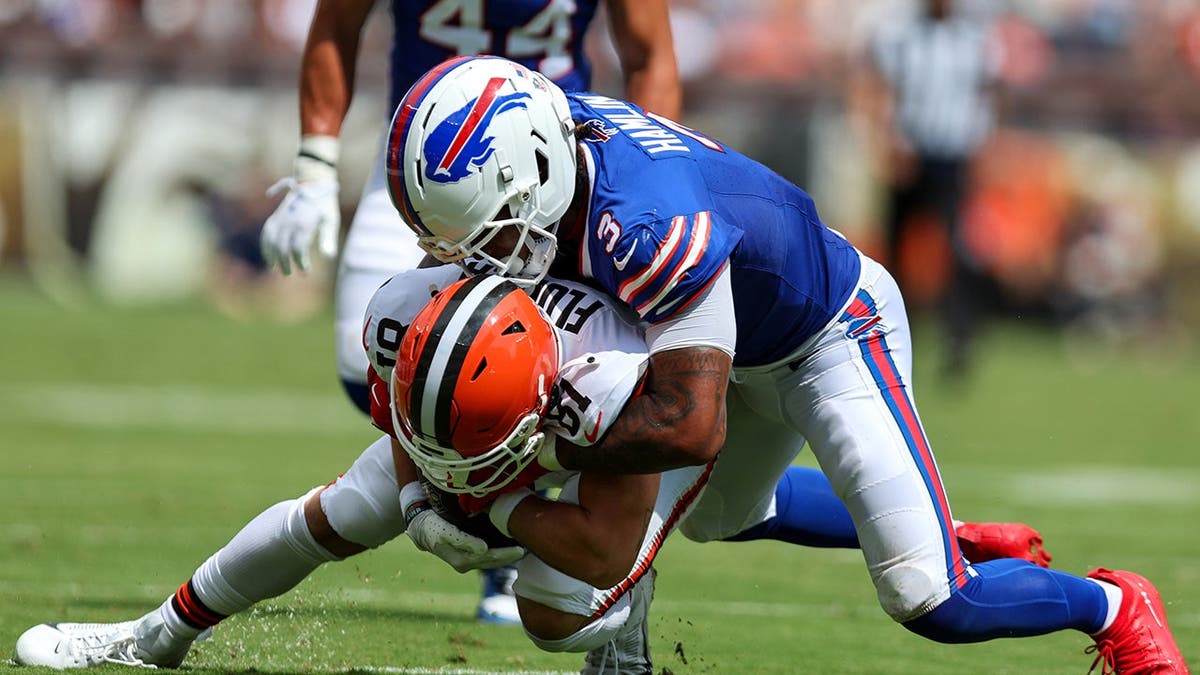
Buffalo Bills safety Damar Hamlin tackles Cleveland Browns wide receiver Luke Floriea during the second quarter of an NFL preseason game Aug. 22, 2026, at Huntington Bank Field in Cleveland, Ohio. (Icon Sportswire)
The study found that at least one in every four people who have played in the NFL might expect to end up with CTE at some point in their lives.
For the study, 878 former NFL players who died from 2016-21, which varied from players in their 20s to their 80s and in between, at least 215 of them had CTE in some stage.
That’s 24.5%, with the actual prevalence likely being higher considering there were 643 of those brains that were not examined.
ALDON SMITH’S FAMILY DONATING HIS BRAIN TO CTE RESEARCH AS ATTORNEYS INVESTIGATE DEATH
If these results were applied to the NFL today, which consists of 1,696 players on the active roster combined for all 32 teams — this doesn’t include practice squad players and those not on the roster due to other injury reasons — around 415 would be diagnosed with CTE.
One of the main problems of the degenerative brain disease is that it can only be confirmed as a diagnosis post-death once the brain is examined.
The neurodegenerative disease is caused by repeated blows to the head as well as severe head trauma. The symptoms found in those with CTE include memory loss, mood swings, erratic behavioral actions and more.
While the disease was first found in boxers, it has become associated with football players in this modern era due to the repeated blows to the head sustained on every snap of the ball. It has, however, also been found in athletes participating in hockey, rugby and other sports.
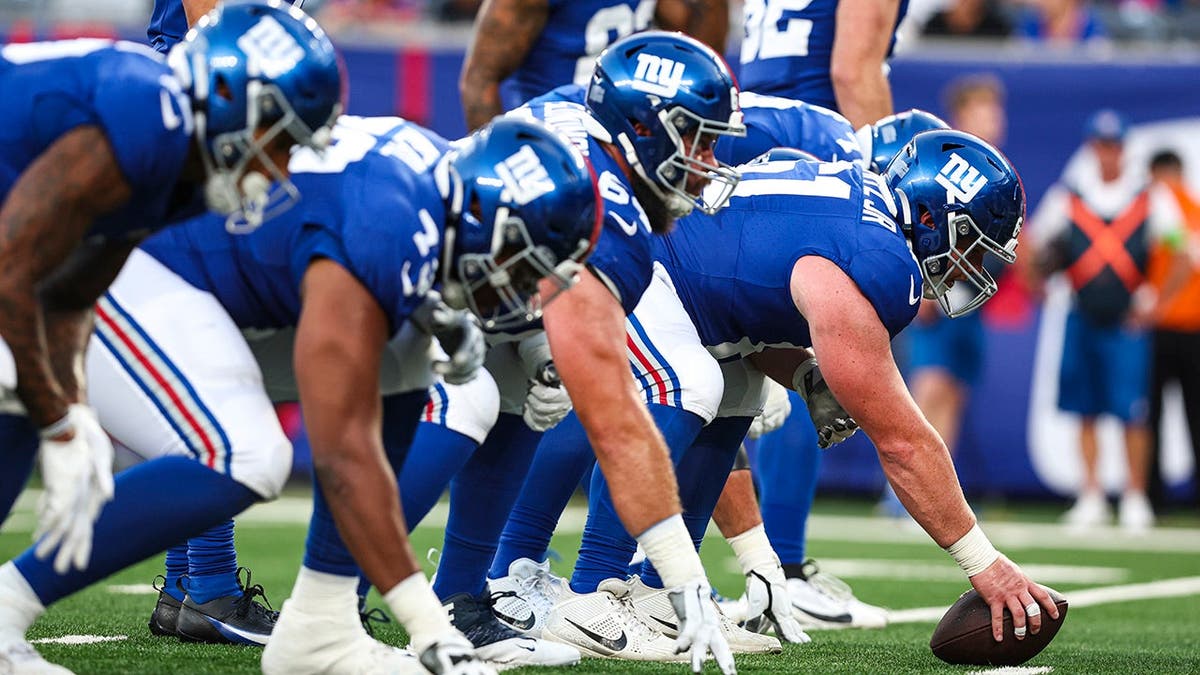
The New York Giants offensive line sets up against the Carolina Panthers during the first half at MetLife Stadium in East Rutherford, N.J., on Friday, Aug. 18, 2023. (Getty Images)
But its connection to football became public when beloved players like Junior Seau, Mike Webster, Frank Gifford and others were diagnosed with CTE after their deaths. Webster was dubbed “Patient Zero” after Dr. Bennet Omalu examined his brain and became the first to diagnose an NFL player with CTE, jump-starting a concussion crisis within the game.
Dr. Julian Bailes, a neurosurgeon and chief medical advisor for Q-30 Sports Science, has spent decades studying the disease as well as concussion and repetitive subconcussive impacts. He helped pioneer the early investigation into CTE, being portrayed by Alec Baldwin in the popular film, “Concussion.” He has also authored more than 300 publications and previously advised the NFL Players Association, NCAA and Pop Warner Football.
Seeing this study, Dr. Bailes believes it “should be a call to action for everyone involved in football.”
SUPER BOWL CHAMPION STEVE MCMICHAEL, WHO DIED LAST YEAR, REVEALED TO HAVE CTE
“We have made tremendous progress in recognizing and managing concussions, but the science increasingly tells us that diagnosed concussions are only part of the equation,” Dr. Bailes said in a statement provided to OutKick. “Repetitive head impacts accumulated over years of play matter, and we need to bring the same urgency we’ve applied to understanding CTE to preventing and reducing the forces experienced by the brain in the first place.
“That means continuing to advance rules, training, equipment and new approaches to brain protection at every level of the game. This should not be approached as an all or nothing assignment. The next frontier in athlete safety must be proactive brain protection.”
A simple proactive action would be eliminating repeated blows to the head, which researchers know prevents CTE. Obviously, the game of football would forever be changed and there’s much more complexities there, especially at the professional level.
“The NFL continuously strives to make the game of football safer, including by implementing strategies to reduce concussions and head impacts,” the league told The Athletic in a statement. “The NFL remains committed to ensuring that the NFL community has access to robust — and expanding — set of resources to enhance their physical and mental well being.”
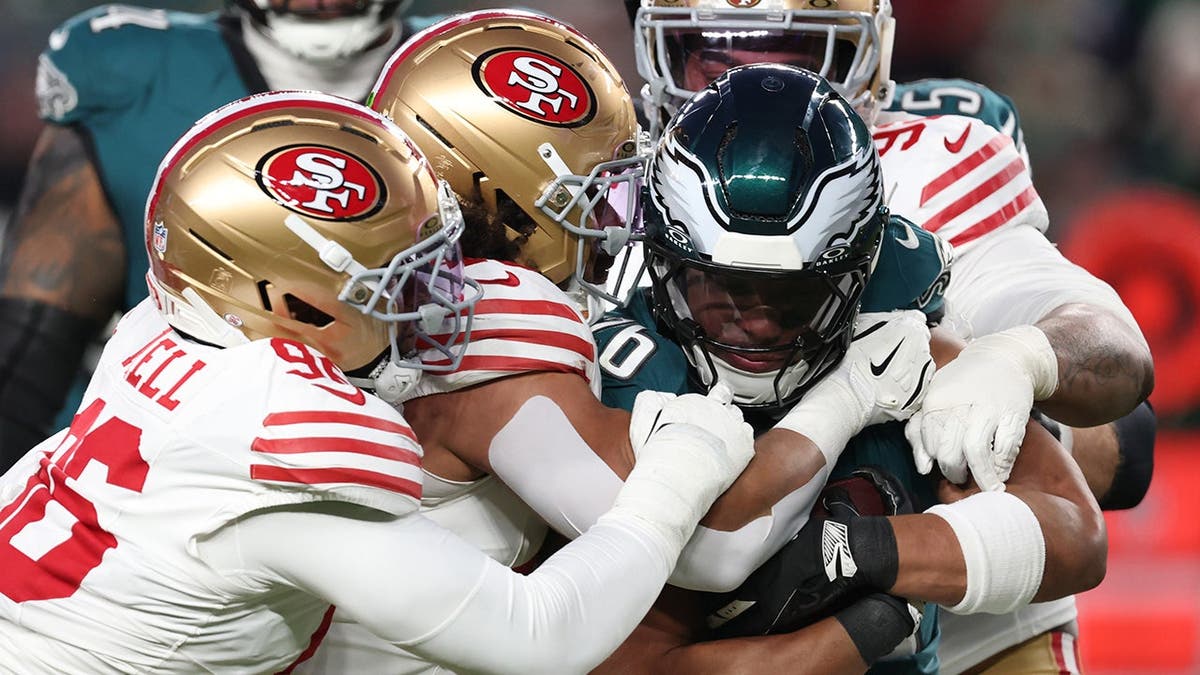
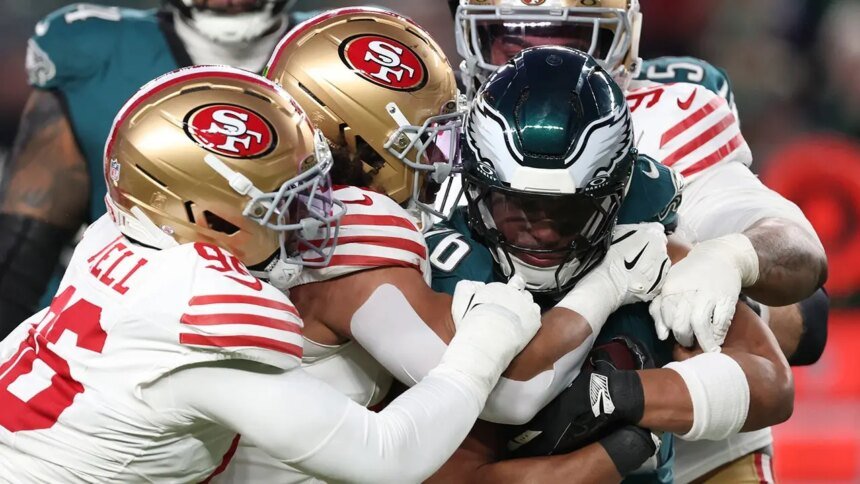
San Francisco 49ers defenders tackle Saquon Barkley of the Philadelphia Eagles during the first quarter of an NFC Wild Card playoff game at Lincoln Financial Field on Jan. 11, 2026, in Philadelphia, Pa. (Getty Images)
CLICK HERE TO DOWNLOAD THE FOX NEWS APP
The NFL Players Association also told the outlet, “The finds should serve as a call to action across the entire football ecosystem.”
There were 168 documented in-game concussions during the 2025 NFL season, which was a 30% increase from the 129 record during the 2024 campaign. There were a total of 538 evaluations and 26 medical timeouts as well.