
NEWYou can now listen to Fox News articles!
You’re scrolling online when you spot a campaign T-shirt supporting your favorite candidate. The website looks professional, the merchandise looks legitimate and the address includes the candidate’s name. You might even see the word “official” at the top of the page. So, you assume your purchase supports the campaign. But what if the candidate has nothing to do with that store?
With the Nov. 3 midterm elections approaching, new research shared with CyberGuy reveals a troubling discovery in Texas. Researchers at cybersecurity company Attaxion identified 626 unofficial election-related domains, including 30 online merchandise stores presenting themselves as official campaign shops.
Attaxion says it could not verify an official campaign connection for any of the 30 stores. Even more surprising, researchers found that nearly all appeared to come from just two sellers offering merchandise for competing Republicans and Democrats. The findings arrive as the FBI warns about election-related scams involving fake merchandise, fraudulent donations and websites designed to steal personal information. And while this investigation focuses on Texas, the warning signs apply to elections and online shopping across the country.
Join our upcoming CyberGuy LIVE class: 5 Ways to Travel Smarter and Save Money
In this free live online class, Kurt “CyberGuy” Knutsson will share five practical ways to protect your trip and your wallet this holiday travel season. You’ll learn how to secure your phone and personal information, find better travel deals, avoid common scams, save money on bookings and use technology to make your travels easier and less stressful. No technical experience is needed.
Join us Saturday, October 31, at 11 AM ET / 8 AM PT. Register free now at CyberGuyLive.com.
DON’T LET FAKE ELECTION WEBSITES FOOL YOU BEFORE 2026 MIDTERMS
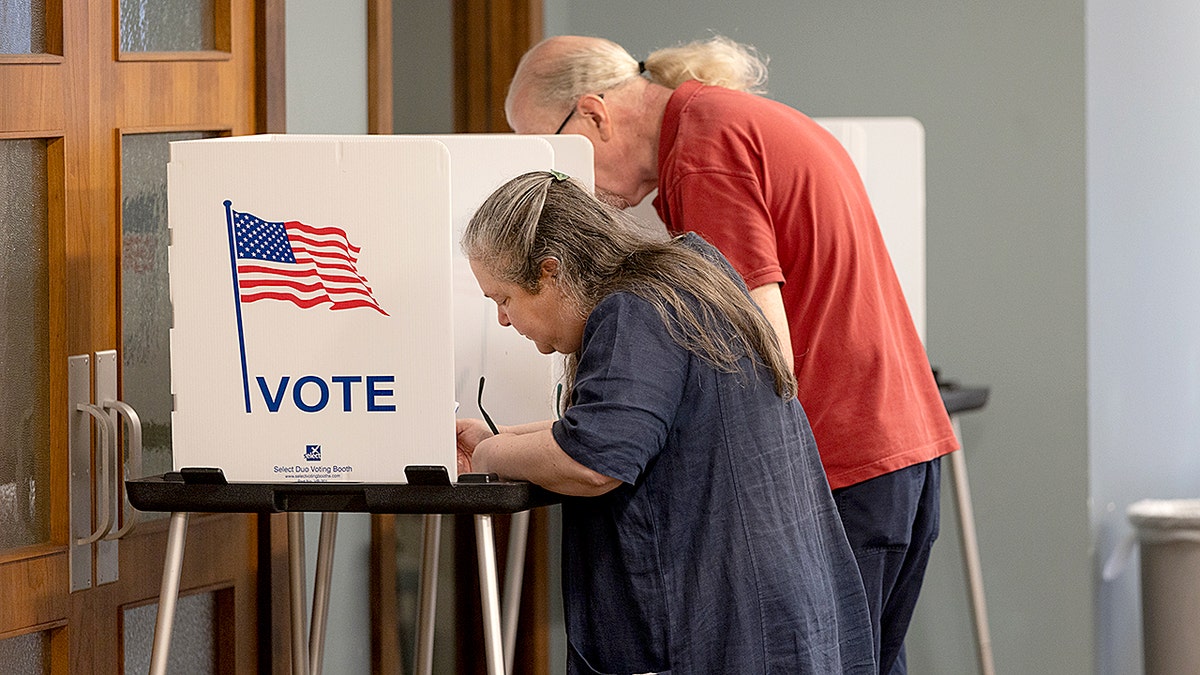
Websites selling campaign merchandise resemble official campaign shops, but researchers found no verified connection to campaigns for many of the identified websites. (Scott Olson/Getty Images)
Researchers uncover 626 unofficial Texas election domains
Texas voters are already heading to the polls. Early voting for the Nov. 3 general election began Oct. 19 and continues through Oct. 30. Meanwhile, researchers are finding that candidates’ names have become valuable online real estate. Attaxion, a cybersecurity company that helps organizations identify vulnerable websites and other online threats, examined domains connected to the state’s U.S. Senate race, governor’s race and six competitive congressional districts. The investigation also included websites resembling election offices and voter information pages.
Researchers initially identified 704 domains. After excluding 25 official sites and another 53 domains connected to campaigns or election offices, 626 unofficial addresses remained. Of those, 553 had DNS records when checked. That means the domains had some internet configuration, although it does not establish that each hosted an active website. The Senate race accounted for 323 unofficial domains. Another 75 referenced House candidates, while 70 used gubernatorial candidates’ names. The remaining domains referenced election offices or general election-related terms.
Importantly, an unofficial domain is not automatically a scam. Some may belong to supporters, critics or independent businesses. Others may be registered without hosting an active website. However, the researchers identified a smaller group that deserves closer attention.
30 Texas campaign merchandise stores raise questions
Of the 626 unofficial domains, Attaxion identified 30 online stores that presented themselves as official merchandise sellers for Texas political candidates. The stores promoted products associated with Republican U.S. Senate candidate Ken Paxton and Democratic opponent James Talarico. Others used the names of Republican Gov. Greg Abbott and his Democratic challenger, Gina Hinojosa.
Researchers also identified stores featuring congressional candidates. Alexandre François, Research Contributor at Attaxion, worked on the investigation and shared the findings with CyberGuy. “Two things stood out. The first is how little the politics seem to matter to the people selling,” François told CyberGuy.
He explained that nearly all the stores appeared to come from the same two sellers, despite promoting candidates from opposing parties. In Texas’s 23rd Congressional District, researchers found stores supporting the Republican and Democratic nominees that appeared to share an operator. That raises an obvious question. If a business is selling merchandise for competing candidates, is it really connected to either campaign? According to the investigation, none of the 30 stores could be verified as campaign-operated.
Two sellers appear to control nearly all 30 stores
Attaxion traced most of the merchandise websites to two seller identities: ShirtGoat and madetoprints. ShirtGoat appeared to operate 12 stores and was likely connected to two more. Meanwhile, madetoprints was associated with another 15. The researchers found that both sellers used similar website templates while swapping out candidates’ names and merchandise. Some sites also borrowed slogans that appeared on official campaign products.
For example, when Talarico’s campaign responded to a political nickname with an “I’m a Talafreako” shirt, similar products appeared in three unofficial stores. “It suggests that the motive is most likely commercial rather than political,” François explained. “Someone with a political agenda would be unlikely to sell merchandise for both sides of the same race.”
Researchers also noticed that several domains were registered on the same day. Some stores reused identical policies with only the candidate’s name changed. A few terms-of-service pages even contained apparent chatbot responses left behind during the creation process. That suggests some operators may be creating these stores quickly and repeatedly. However, the researchers could not establish the legal identities of the people controlling all the websites.
Why these political merchandise websites look legitimate
One of the biggest challenges is how convincing the stores can appear. A website might feature professional product photos and familiar campaign slogans. It may also offer a functional shopping cart with a normal-looking checkout. Those features can create confidence before someone even thinks to check who operates the business. François says that assumption can be risky. “The first thing to know is that appearance is no longer a reliable guide. With AI, anyone can quickly build a polished store with well-written text, so the old signs of poor design and clumsy language rarely apply, and neither does the word ‘official’.”
Attaxion found that none of the 30 unofficial stores included the campaign-related “Paid for by” disclosure the researchers expected to see. However, independent businesses selling political merchandise are not automatically required to display campaign finance disclaimers. The missing disclosure is one warning sign, not proof of fraud or a legal violation. The stores also failed to provide a verifiable company identity and business address. Some listed a seller name or customer service email address. However, those details did not establish an official relationship with a candidate.
To investigate the websites, Attaxion compared them against verified campaign information from the Federal Election Commission and Texas Ethics Commission. Researchers also examined registration records and revisited the stores on Oct. 20 to check their contact pages, policies and checkout processes. None of those checks established a connection to the campaigns.
119,000 FAKE SHOPS COULD STEAL YOUR CREDIT CARD DETAILS
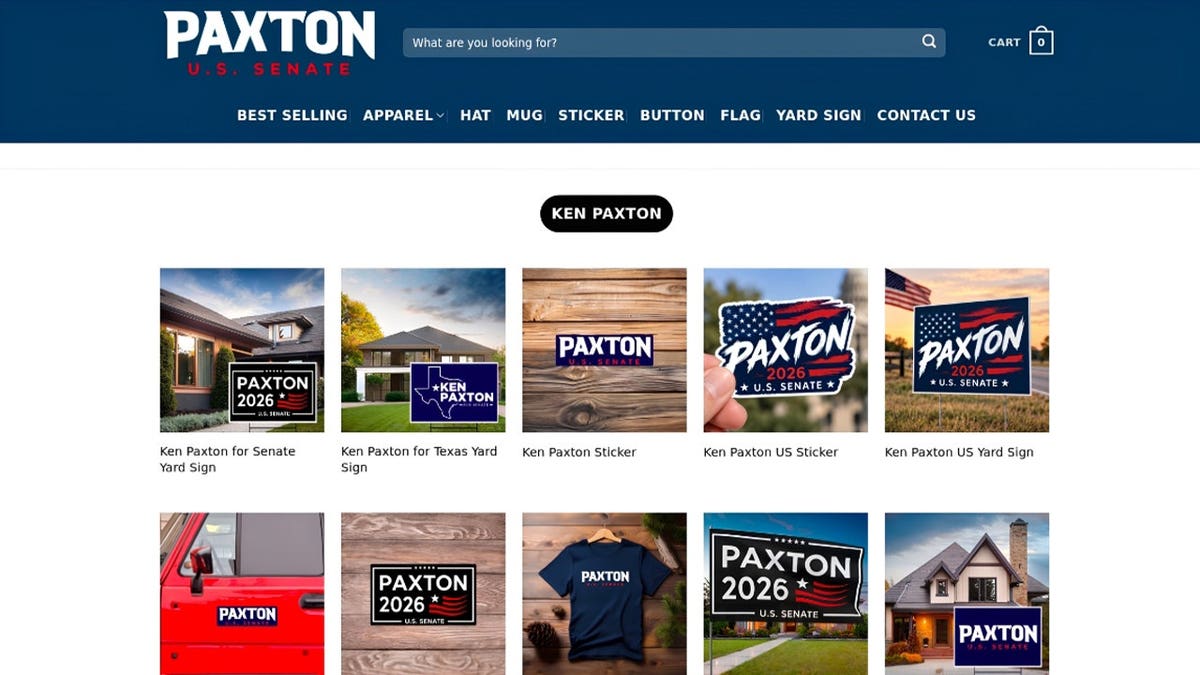
An unofficial Ken Paxton merchandise store is linked to a seller network that researchers found operating websites for candidates from both political parties. (Attaxion)
A former election website now promotes an online casino
The researchers uncovered another unusual example involving an expired election website. The domain elpasoelections.com sounds like it could belong to an election office in El Paso, Texas. However, it previously served El Paso County in Colorado. That county used the address for election information for years before allowing its registration to lapse in February 2026. A domain buyer acquired the address in May.
When researchers examined the website, it displayed an online casino promoting itself to Australian users. The investigation identified a new registrant organization associated with Hong Kong, although that record does not independently establish who operates the casino.
François highlighted the discovery as an example of how a once-legitimate web address can change hands. “It is a good reminder that a familiar-looking address does not tell you who holds it today.”
The example extends well beyond politics. An expired website previously used by a government office, nonprofit or business can eventually lead somewhere completely unrelated. For accurate Texas election information, the state’s official website is VoteTexas.gov. For voting information elsewhere in the country, you can start with Vote.gov.
FBI warns about election merchandise and donation scams
The Texas findings follow an October 15 warning from the FBI’s Internet Crime Complaint Center. The agency warned that criminals exploit political campaigns to target people across the United States. Some scammers impersonate candidates to solicit fraudulent contributions. Others advertise political merchandise that customers never receive.
The FBI also warned about fraudulent voter-registration messages that direct people to websites designed to collect personal information. Artificial intelligence can make these schemes harder to recognize. Criminals can generate convincing written messages and realistic voices that appear to come from legitimate organizations. However, there’s an important limitation to the Texas investigation.
Attaxion did not determine whether customers lost money through the 30 stores.
“At this stage we do not know. We did not place test orders, and our research does not include payment records or customer complaints, so we have no evidence either way,” François told CyberGuy.
The researchers also did not investigate whether the operators promoted their stores through Google ads, social media or political text messages. They did examine observed DNS traffic and found that some unofficial domains had received lookups. However, those records cannot establish how someone discovered a website or whether they completed a purchase. The findings raise concerns about misleading campaign connections without proving that all the stores committed fraud.
How to protect yourself from fake campaign websites and online scams
These precautions apply to political merchandise stores and fundraising pages nationwide. They can also help you recognize ordinary shopping scams and websites that impersonate trusted organizations.
1. Start with a website you can verify
Before buying political merchandise or making a donation, find the candidate’s established campaign website. Look for the merchandise or contribution page linked directly from that website. For federal candidates, you can also use the Federal Election Commission’s database to verify campaign committees and find their reported information. If you’re shopping from an unfamiliar retailer, visit its official website independently rather than following a promotional link. This approach also works when someone claims to represent a bank, charity or government agency.
2. Check the full website address
Scammers and unauthorized sellers can register web addresses that closely resemble legitimate ones. Look for misspellings or added words that make an unfamiliar address appear trustworthy. Don’t assume a website belongs to an organization simply because the address contains its name or the word “official.” You can also use a WHOIS lookup to investigate when a domain was registered. A newly created website deserves closer attention, especially when it claims to represent an established organization. However, domain age alone cannot establish whether a website is legitimate. And remember, HTTPS encryption protects information while it travels between your browser and a website. It does not prove that the site’s operator is trustworthy.
WHY VERIFIED SOCIAL MEDIA ACCOUNTS CAN STILL LEAD YOU INTO A SCAM
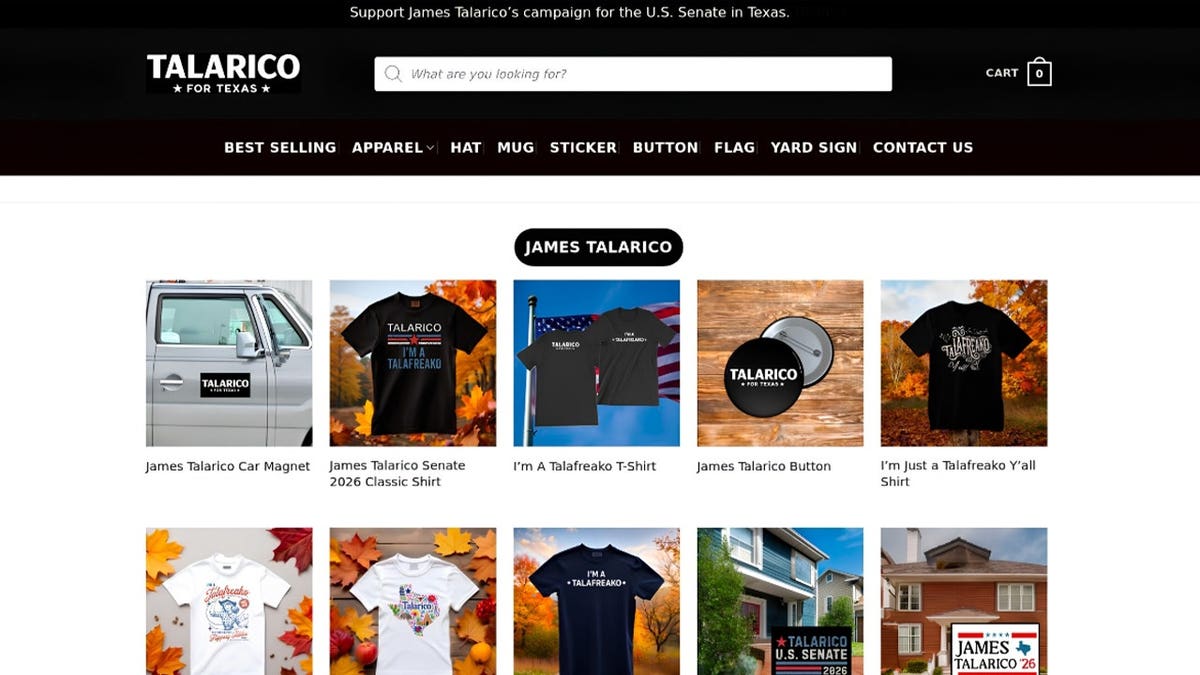
This unofficial James Talarico merchandise store uses a nearly identical layout to the Ken Paxton store, with both linked to the same seller contact. (Attaxion)
3. Verify who receives your money
Before contributing to a political campaign, confirm the organization receiving the payment. Federal political committee websites generally must include a disclaimer identifying who paid for the communication. When applicable, the disclosure also identifies the campaign or committee that authorized it. Look for a “Paid for by” statement and compare the information with official campaign records. Many political campaigns use fundraising platforms such as ActBlue or WinRed. Others use different payment systems. The key is reaching the contribution page through the campaign’s verified website. Independent businesses may legally sell political merchandise without supporting a campaign. However, they should not mislead you about who receives your money. A missing or suspicious disclosure deserves attention, but a disclaimer alone does not guarantee legitimacy.
4. Investigate unfamiliar sellers before purchasing
Take a closer look at any online store you’ve never used before. Search for the company name along with terms such as “reviews,” “complaints” or “scam.” Read its return and refund policies. Look for a legitimate way to reach customer support. The Better Business Bureau at bbb.org/ can be another place to check for complaints, although the absence of complaints does not prove a company is trustworthy. If you cannot establish who operates a website, consider buying elsewhere.
5. Be skeptical of unexpected texts and emails
A scammer may send a message claiming that your voter registration needs attention. Another might pressure you to contribute immediately or purchase merchandise before an offer disappears. The same tactics appear in fake bank alerts and fraudulent delivery notifications. Avoid clicking payment or account-verification links in unsolicited messages. Instead, open the organization’s established website yourself. For election-related messages, check information through Vote.gov or your state election office. Be especially cautious about messages asking for passwords, Social Security numbers or payment details.
6. Use safer payment methods
When shopping online, paying with a credit card generally gives you stronger protections if an order never arrives or a charge is incorrect. Avoid unfamiliar sellers that insist on payment through gift cards, cryptocurrency or wire transfers. Those methods can make recovering your money difficult. Keep your purchase confirmation and review your statements after paying. Also, check whether a political contribution involves recurring payments before submitting it. The FTC’s online shopping guide explains how to research sellers and protect yourself when making purchases.
7. Protect your accounts and personal information
A suspicious shopping site may ask you to create an account before checking out. Never reuse a password from your email, banking or other important accounts. Use a password manager to create unique passwords and enable two-factor authentication (2FA) when available. Strong antivirus software can also help detect malicious downloads and block some dangerous websites. However, it cannot verify whether a political merchandise store is actually affiliated with a campaign. Be selective about the information you share, especially when you cannot verify who operates the website. Get my picks for the best 2026 antivirus protection winners for your Windows, Mac, Android and iOS devices at CyberGuy.com.
What to do if you already paid a suspicious website
If you’ve purchased merchandise or sent money through a questionable website, act promptly when something appears wrong.
- Contact the seller if an order never arrived. If the seller doesn’t resolve the problem, contact your card issuer about disputing the charge. If you suspect fraud or see unauthorized charges, contact your bank or card issuer immediately.
- Save your records. Keep receipts, confirmation emails and screenshots showing the website address and payment details.
- Review your accounts. Look for unfamiliar transactions or recurring payments you did not authorize.
- Change reused passwords. Update any other account where you used the same login information.
- Report suspected fraud. File a report with the FTC at reportfraud.ftc.gov/ or the FBI’s Internet Crime Complaint Center at ic3.gov/. You can also contact your state attorney general’s consumer protection office.
If you entered sensitive identity information into a suspicious website, visit IdentityTheft.gov for personalized recovery guidance.
Kurt’s key takeaways
What stands out to me about this investigation is that the people behind these stores appear willing to sell merchandise for candidates on both sides of the same race. That raises serious questions about what shoppers are being led to believe. I have no problem with an independent business selling political merchandise. But I do have a problem when a website gives people the impression they’re supporting an official campaign without making clear who’s actually taking their money. And here’s something else worth remembering. The FBI is already warning about election scams involving merchandise that never arrives and fake donation requests. Meanwhile, AI makes it easier than ever to create a convincing website. I wouldn’t judge a store by its design or the word “official” in its address. I’d go straight to the organization I want to support and use the links it provides. The same advice applies when you’re shopping online or responding to an unexpected request for money. A few extra moments of checking can make a difference.
Have you ever purchased something from a website you thought was official, only to discover later that it wasn’t connected to the company or organization you wanted to support? Should websites that falsely claim official affiliations face tougher consequences? Let us know by writing to us at CyberGuy.com.
Sign up for my FREE CyberGuy Newsletter
- Get my best tech tips, urgent security alerts and exclusive deals delivered straight to your inbox.
- For simple, real-world ways to spot scams early and stay protected, visit CyberGuy.com – trusted by millions who watch CyberGuy on TV daily.
- Plus, you’ll get instant access to my Ultimate Scam Survival Guide free when you join.
CLICK HERE TO DOWNLOAD THE FOX NEWS APP
Copyright 2026 CyberGuy.com. All rights reserved.