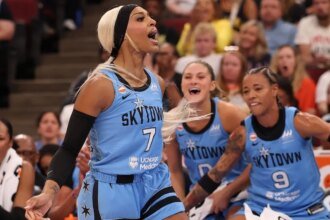
Long before Indiana Fever guard Sophie Cunningham challenged the conversation surrounding women’s sports, Payton McNabb was living its consequences.
A high school volleyball match changed McNabb’s life. Years later, she sees Cunningham taking on a fight that has followed her all the way to Capitol Hill.
WATCH PAYTON MCNABB’S FULL INTERVIEW WITH OUTKICK:
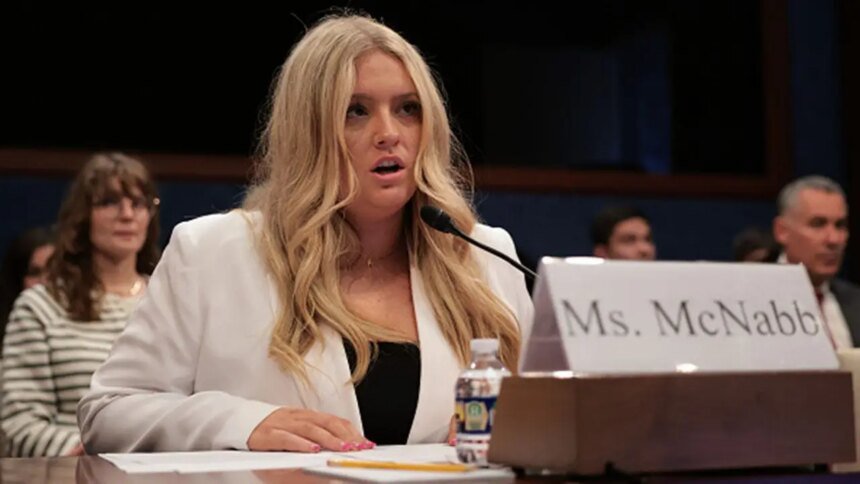
After suffering a traumatic brain injury and partial paralysis on her right side from a ball spiked by a biological male opponent, McNabb took her fight from a North Carolina volleyball court to Washington, where she has testified before lawmakers in defense of women’s sports and Title IX.
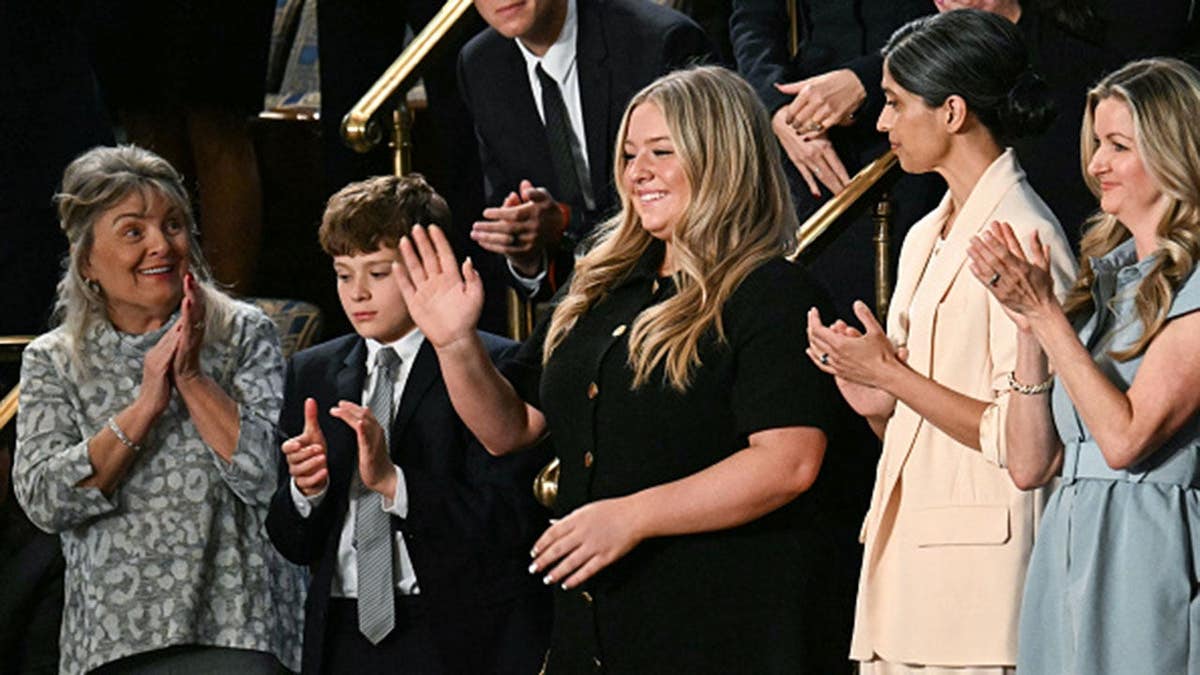
Payton McNabb, a former high school athlete, is recognized by President Donald Trump during an address to a joint session of Congress at the U.S. Capitol in Washington, D.C., on March 4, 2025. (AFP via Getty Images)
JD VANCE PRAISES SOPHIE CUNNINGHAM FOR ‘SAVE WOMEN’S SPORTS’ ACTIVISM
Now 21, McNabb sees that same battle reaching the WNBA and believes the league’s response is exposing a glaring double standard.
Speaking exclusively with OutKick, McNabb applauded Cunningham for taking a stand, ripped Minnesota Lynx head coach Cheryl Reeve over her support for transgender inclusion and explained why Caitlin Clark’s voice could carry enormous weight with the next generation of female athletes.
“I started speaking out when I was 18,” McNabb told OutKick. “I’m 21 now, but within the last few years, why have I had to go in front of Congress and explain that there’s a biological difference between a man and a woman? It makes no sense, and it sounds like such a dumb argument.”

Payton McNabb, a former North Carolina high school volleyball player injured by a transgender opponent, speaks during a hearing on “Unfair Play: Keeping Men Out of Women’s Sports” held by the Department of Government Efficiency Subcommittee at the U.S. Capitol on May 7, 2025, in Washington, D.C. (Getty Images)
Cunningham’s willingness to speak out has particularly impressed McNabb, especially as the Fever guard’s profile has soared.
“What we’ve seen through Sophie Cunningham has been so courageous,” McNabb said. “I just applaud her so much because it takes a lot to say this, unfortunately, and it shouldn’t, but it does.”
“For her to say it now and not wait until it’s safe … and her career is really taking off, I think it just adds a whole other layer on top of how special it really is,” McNabb continued. “We don’t really have a lot of big-name athletes willing to say it, and that’s really unfortunate, but that’s just the way it is. But it’s because of how they get treated.”
McNabb pointed to the backlash Cunningham has received as evidence of that risk.
“She’s getting vilified or villainized for literally just saying what everyone already knows and thinks, but are just too afraid to admit,” McNabb said. “It’s just crazy because there wouldn’t be a WNBA. We wouldn’t know who [Lynx coach] Cheryl Reeve is or even Sophie Cunningham or any of these girls if it wasn’t for Title IX.”
CHERYL REEVE SENDS CLEAR MESSAGE TO SOPHIE CUNNINGHAM WITH ‘TRANS KIDS BELONG’ SHIRT DURING FEVER-LYNX GAME
McNabb had far less praise for Reeve, who has publicly defended trans participation in sports and wore a Trans Kids Belong shirt during a matchup against Cunningham and the Fever to prove it.
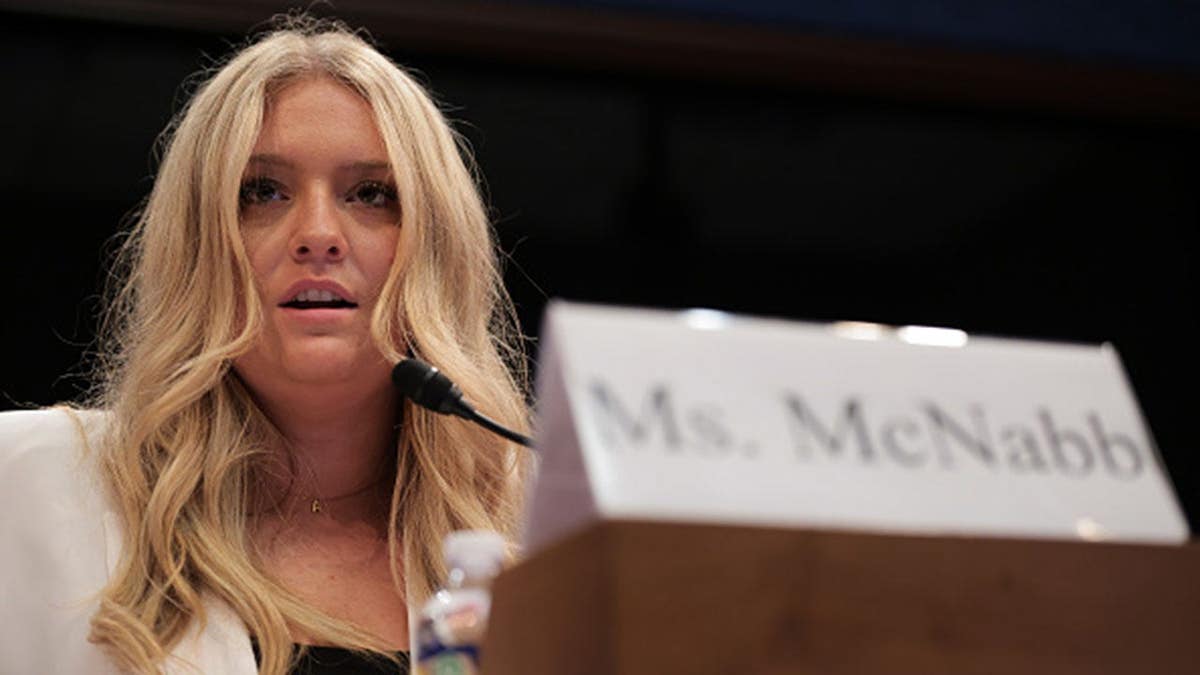
Payton McNabb, a former North Carolina high school volleyball player injured by a transgender opponent, speaks during a hearing on “Unfair Play: Keeping Men Out of Women’s Sports” held by the Department of Government Efficiency Subcommittee at the U.S. Capitol on May 7, 2025, in Washington, D.C. (Getty Images)
“It just seems like women like Cheryl Reeve who were fighting against other women and girls, I just will never understand that,” McNabb said. “You have little girls who are showing up to the game and excited about their favorite player standing up for them and wanting the same opportunities that she has to be in place for them. And the coach seems to be pulling up the ladder.”
McNabb called out the glaring hypocrisy of demanding empowerment for female athletes while simultaneously opening the door for biological men to take their spots.
“You can’t complain on one hand about not getting as much as the men or not getting as many opportunities or viewers … and then on the next, you’re encouraging men to take over the very category you’re wanting separate from them,” McNabb said.
McNabb predicted the league’s virtue signaling will evaporate the second a biological male steps onto a WNBA court and forces players to face reality.
McNabb pointed to Julie Tétart, a 6-foot-3 biological male dominating a French women’s league who (with the help of OutKick’s Joe Kinsey and founder Clay Travis) recently signaled interest in making the jump to the WNBA.
“I think it’s gonna have to take this dude from France to come in here and like dunk on Angel Reese and then maybe they’ll be like, ‘Oh, maybe this isn’t allowed,'” McNabb said. “I don’t know. It’s going to have to affect them personally.”
Make no mistake: McNabb isn’t rooting for biological men to wreck the WNBA. She wants these athletes protected, even if they won’t fight for themselves.
CLAY TRAVIS SETS SIGHTS ON FRENCH TRANS PHENOM JULIE TETART FOR PROPOSED ‘INCLUSIVE’ WNBA EXPANSION TEAM
“Of course, I don’t want that to happen,” she said. “I’m fighting for the girls that are even going against us because I want them to have the protections and the opportunities whether they like it or not.”
McNabb challenged the league’s progressive establishment to put its money where its mouth is: if biological males belong in girls’ high school athletics, they belong in WNBA coaching spots, too.
“I want transgender coaches,” McNabb said. “I think that there should be a transgender coach taking Cheryl Reeve’s place because that will be just as much of a woman as she is. … If they’re saying this is okay for the high school girls, then it should be okay for them.”
Then there’s Caitlin Clark.
THE LEFT WANTS CAITLIN CLARK, SOPHIE CUNNINGHAM TO SHUT UP AND DRIBBLE WHEN IT COMES TO TRANS SPORTS
McNabb understands why the Fever superstar has largely kept the focus on basketball rather than wading into another contentious issue.
“She gets a lot of backlash for literally no reason, from jealousy,” McNabb said. “I could imagine not wanting more of that would probably be ideal.”
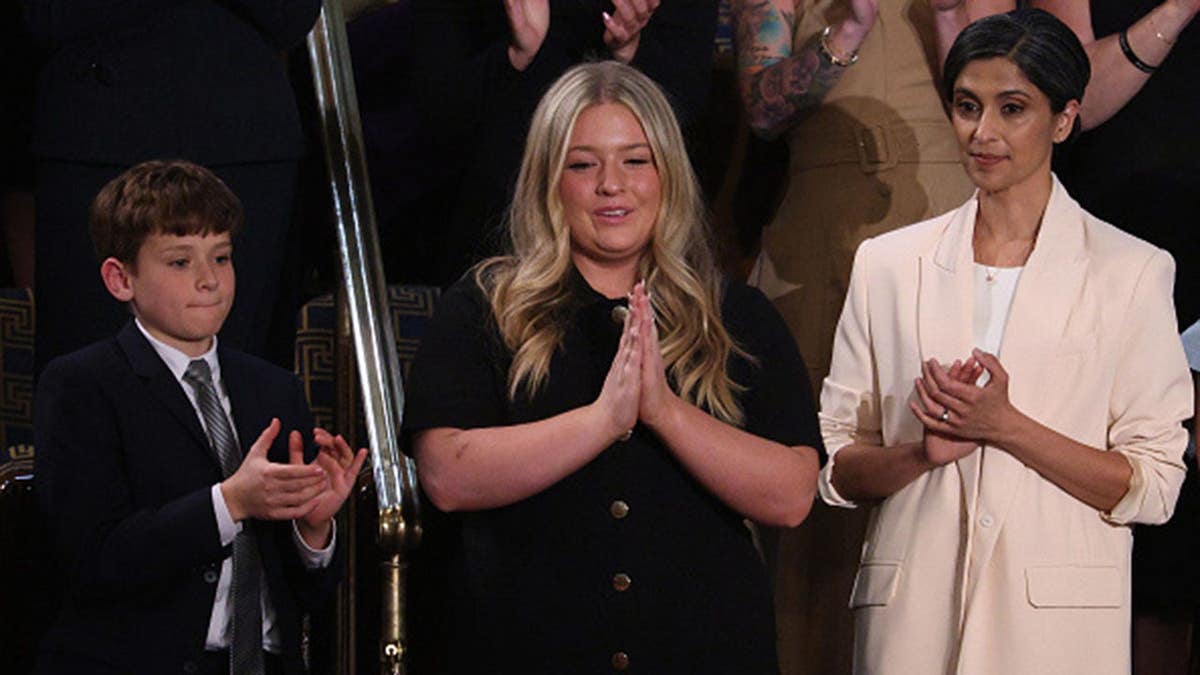
Payton McNabb and Second Lady Usha Vance attend President Donald Trump’s address to a joint session of Congress at the U.S. Capitol in Washington, D.C., on March 4, 2025. (Getty Images)
Still, McNabb believes Clark’s enormous influence makes her part of the Title IX debate whether she addresses it publicly or not.
“Whether Caitlin Clark likes it, she’s a part of the conversation, and it would just mean so much to the next generation,” McNabb said. “To all the little girls in the stands that are wearing number 22, it would mean a lot to them.”
THESE FEMALE ATHLETES NEED TO SPEAK UP ABOUT KEEPING WOMEN’S SPORTS FOR WOMEN, LIKE SOPHIE CUNNINGHAM DID
Few voices in women’s basketball, McNabb argues, could carry more weight.
“She’s the best player in the WNBA, and for her to be able to take a stance and say something, that would be huge,” McNabb said. “She’s where she is today because of Title IX, and she needs to be able to acknowledge that and accept that and want that for the next generation of girls.”
For McNabb, the issue remains deeply personal.
More than three years after the volleyball injury that changed her life, McNabb said her health has finally reached a significant turning point.
CLICK HERE TO DOWNLOAD THE FOX NEWS APP
“The doctors didn’t know if I would ever get back to how I was, and they said it could take three years before I could see real progress,” McNabb said. “It’s so weird, because it actually took exactly three years for me to see a difference in coming back and bouncing back with my health.”
The teenager who once failed public speaking has since testified before Congress and become an Independent Women ambassador, using the injury that changed her life to try to prevent other girls from enduring the same thing.
STAY “FEARLESS” ON THE GO! TAKE TOMI LAHREN WITH YOU. DOWNLOAD THE TLIF PODCAST NOW!
“I wasn’t planning on going into politics, really had no idea what was going on at all,” McNabb said. “I just had a genuine story that happened to a real person and affected a real family and community.”
“I’ve really just tried to use the story to spread awareness in hopes no other girl has to go through what I went through.”
Send us your thoughts: alejandro.avila@outkick.com / Follow along on X: @alejandroaveela