Glucose-monitoring AI ring makes historic debut
Fox News senior medical analyst Dr. Marc Siegel explains ACTXA’s Core Smart Ring, an AI-powered wearable offering non-invasive glucose monitoring. This new technology senses blood flow and pulse, using machine learning to detect elevated blood sugar. Siegel notes its importance given the nearly quadrupled global diabetes cases since 2000, emphasizing lifestyle changes alongside technological advancements for better care.
NEWYou can now listen to Fox News articles!
A University of South Florida (USF) graduate student is developing a high-tech new way to stay safe in style.
Addison Bounds, a 22-year-old former USF beach volleyball player, co-founded Elora Armor, a brand that creates jewelry with a sensor designed to warn its wearer when dangerous substances have been slipped into their drinks.
The company plans to offer bracelets, pendants, keychains and potentially phone cases that can alert if a drink has been drugged, Bounds told Fox 13 Tampa Bay.
COULD A PAINT-ON ELECTRONIC TATTOO SPOT HEART ATTACKS?
Bounds co-founded the brand with Kira Robichaud, a friend with a science background who is helping lead a small team of women developing the technology.
The jewelry is designed to detect benzodiazepines, a common drug linked to drink spiking. After some of the liquid is dropped onto the electromagnetic sensor, an alert is sent through an app, revealing whether the drink has been tampered with.
“You just drop – whatever’s on your finger is plenty – onto the surface of the product,” Bounds said.
CLICK HERE TO DOWNLOAD THE FOX NEWS APP
“You’ll receive a notification to your phone telling you if that drink is safe to consume or not, and if your drink has been spiked, your live location is immediately sent to your safety network that you’ve connected to the app.”
Bounds shared that a friend of hers was drugged in high school and later found unconscious in a closet, where she had been assaulted.
CLICK HERE FOR MORE HEALTH STORIES
“It’s like a really rude awakening … there are people who really intend to do harm, and there isn’t really anyone looking out for us except for ourselves,” she said.
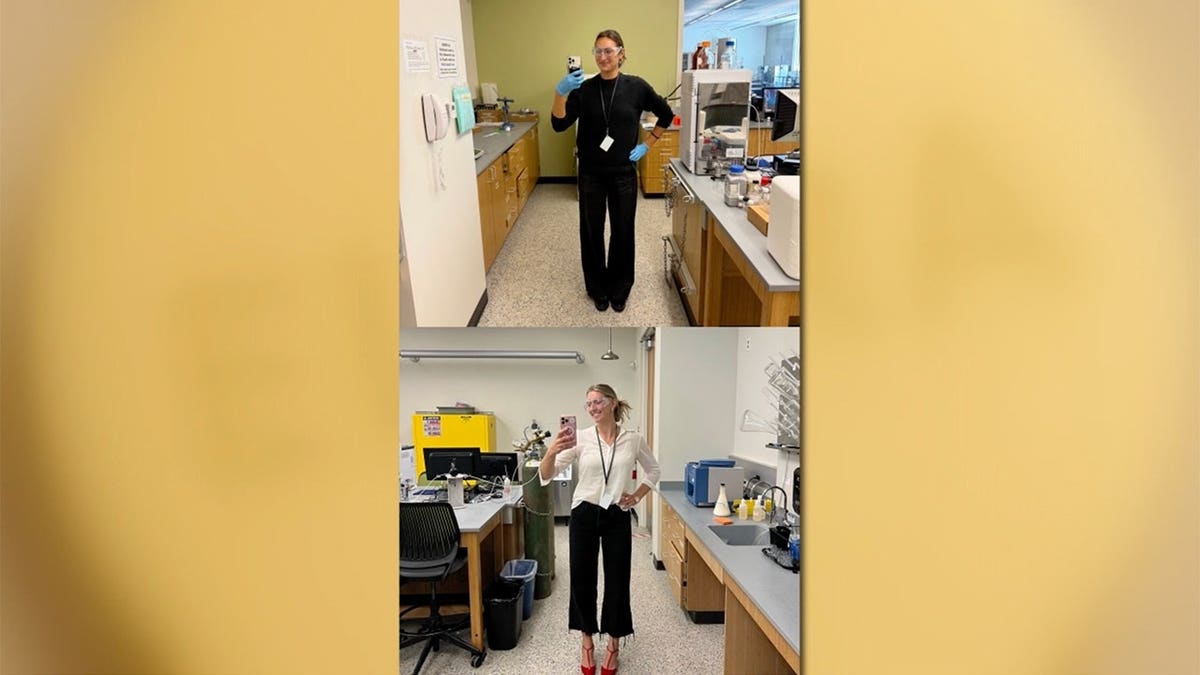
Elora Armor co-founders Addison Bounds and Kira Robichaud are pictured in the lab. (Elora Armor)
Bounds said she hopes to launch the bracelets in January 2028, ahead of the L.A. Olympics, with the goal to “stop drink spiking from happening in the first place.”
Statistics on drink spiking in America remain limited, as it’s difficult to measure and a national tracking system does not exist.
CLICK HERE TO SIGN UP FOR OUR HEALTH NEWSLETTER
However, a 2017 study of more than 6,000 college students at three universities found that 7.8% reported having been drugged without their knowledge or consent. The group included about 10% of the female students and 4% of the males.
Common drink-spiking drugs are often hard to detect and their effect can worsen when mixed with alcohol, according to the Center for Violence Prevention and Self Defense Training. Drink spiking happens most commonly in busy social settings, making it more difficult to detect.
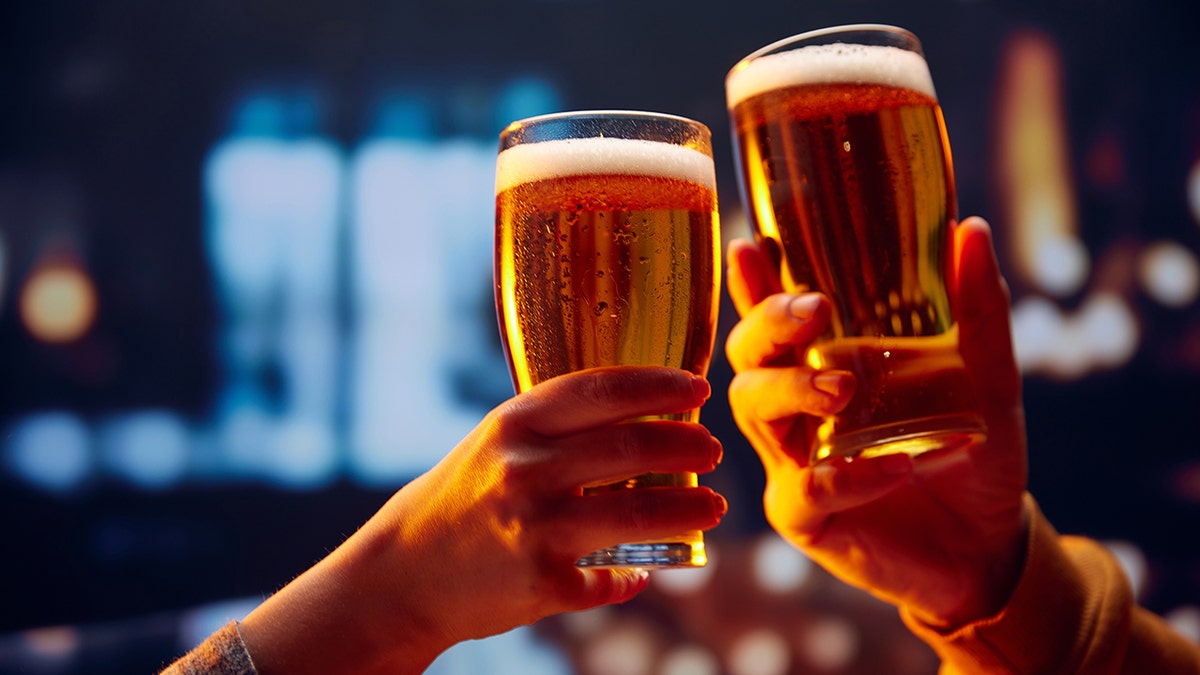
CVPSD shares strategies for preventing drink spiking, including never leaving your drink unattended, only accepting drinks from trusted people, using drink covers, avoiding communal containers, sticking with friends who have your back, and being aware of your surroundings. (iStock)
CVPSD warned to watch out for cues and symptoms that a drink may have been spiked and consumed. Those include rapid or unexpected intoxication, sudden behavioral changes, memory lapses, hallucinations, paranoia, and an unusual appearance or taste of a drink.
Physical symptoms can also include loss of balance, blurred vision, slurred speech, nausea, vomiting and trouble breathing.
TEST YOURSELF WITH OUR LATEST LIFESTYLE QUIZ
Some basic strategies for preventing drink spiking include never leaving your drink unattended, only accepting drinks from trusted people, using drink covers, avoiding communal containers, sticking with friends and being aware of your surroundings, experts say.