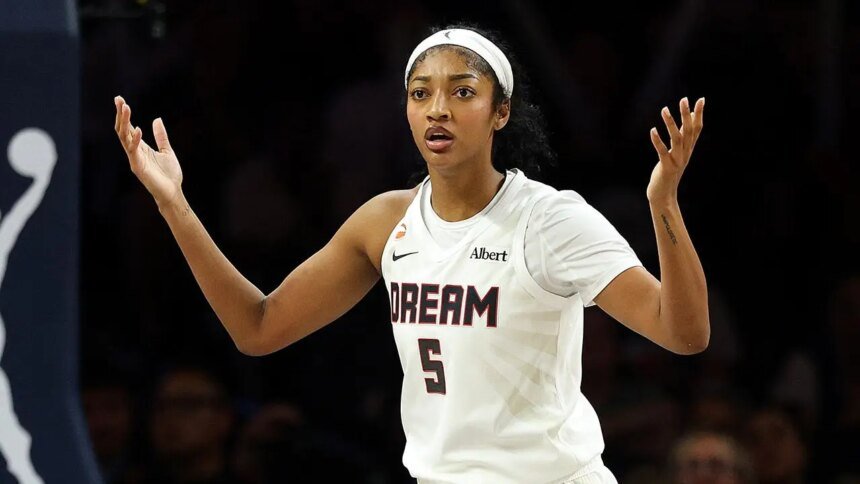
- Angel Reese turned an Australian sports phrase into another racial controversy
- Internet trolls don’t only target Angel Reese
- Reese made criticism of her Caitlin Clark taunt about her identity
- The WNBA investigated alleged racism against Reese and found no evidence
- Reese turned a question outside the team hotel into ‘harassment’
- Reese blamed Caitlin Clark’s fans for racism, death threats and stalking
- Reese hit Clark in the head and blamed the officials
- Reese says talking to reporters is ‘really scary’
- Reese said the media profited from her pain
- Reese used the LSU press conference to talk about everything she had endured
- There are many more examples
For some unknown reason, claiming victimhood is very popular in modern society. Many people seem to think being a victim earns them social capital, so they look for every opportunity to capitalize.
A perfect example is WNBA star Angel Reese.
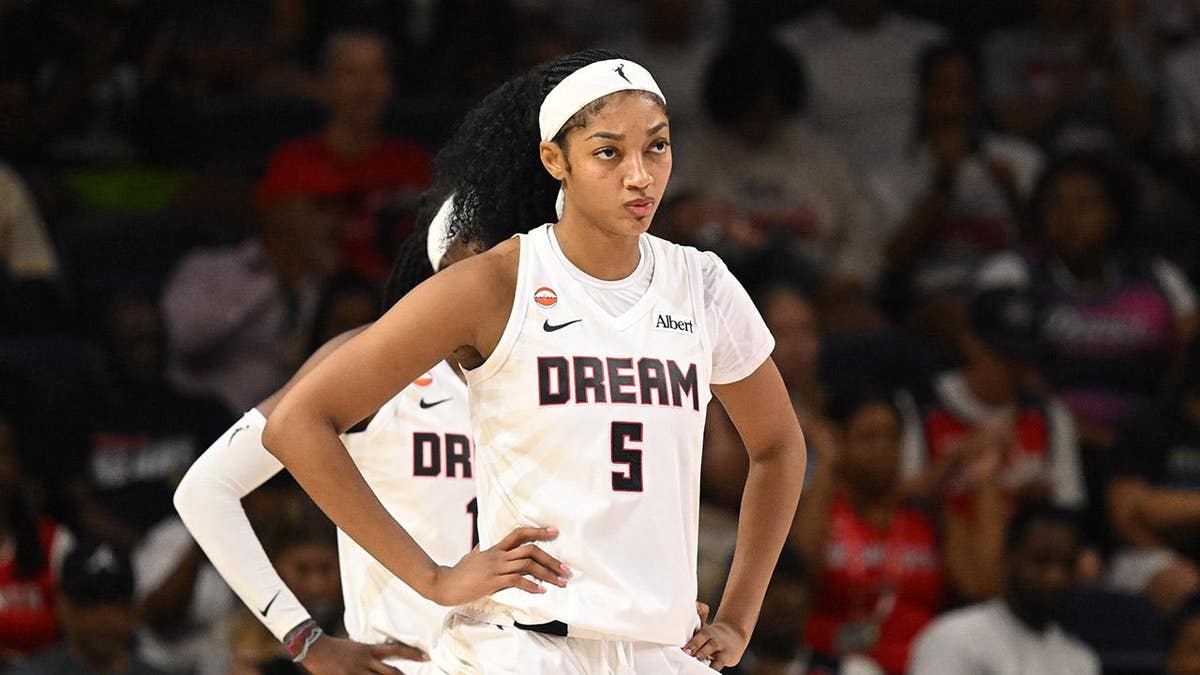
WNBA star Angel Reese loves to play the victim card. (Rafael Suanes/Imagn Images)
Perhaps no prominent professional athlete embodies the desire to be seen as a victim as much as Reese, who has spent years painting herself as someone unfairly treated by fans, coaches, referees, reporters and society at large.
ANGEL REESE DANGEROUSLY PEDDLES RACIST CONSPIRACY THEORY AFTER WNBA COACH CALLS HER TWO WORDS
Of course, that runs counter to the fact that Reese gained immense popularity, fame and money from the same society she regularly claims hates her.
The latest example came this weekend, when Toronto Tempo coach Sandy Brondello was caught on a microphone referring to Reese as a “protected species.”
It was immediately obvious what Brondello meant.
She thought the referees were giving Reese preferential treatment. But it was too late. Brondello provided Reese the perfect opportunity to claim victimhood.
Angel Reese turned an Australian sports phrase into another racial controversy
Reese made contact with Tempo forward Nyara Sabally while the two players battled for a rebound. Sabally fell to the floor in pain.
The officials called the foul on Sabally.
Brondello, understandably annoyed that her injured player had been whistled for the foul, complained from the sideline that Reese was a “protected species.”
Reese responded on social media and tagged Brondello.
“ARE WE SURPRISED?!” Reese wrote, adding a clown emoji while quoting a post that read, “Calling a Black woman a species…”
She didn’t explicitly call Brondello racist, but the implication was obvious. Plus, Reese is smart. She knew the social media mob would do the rest of the work for her.
Part of that means excluding the key context that Brondello is Australian.
In Australian sports usage, ‘protected species’ commonly refers to a player, coach, team or official perceived to receive preferential treatment.
The phrase has been used in Australian coverage of rugby players, referees and other athletes. It has nothing to do with race. Danica Patrick, who is White, was famously described in 2012 as a “protected species” by a fellow NASCAR driver.
More importantly, the context around Brondello’s comment wasn’t remotely confusing.
Brondello said it while arguing about a foul call. Even non-Australians with common sense understood her point.
Yet many of the same people who constantly lecture Americans about cultural sensitivity showed no interest in understanding Brondello’s culture.
They ignored her Australian background, assigned an American racial meaning to an Australian expression and then condemned her for failing to speak like an American.
That seems pretty culturally insensitive, doesn’t it?
Brondello apologized anyway and explained that her frustration was directed toward the officiating. She didn’t have to apologize, and honestly shouldn’t have apologized, but she feared she’d lose her livelihood.
After all, she’s a coach in the WNBA.
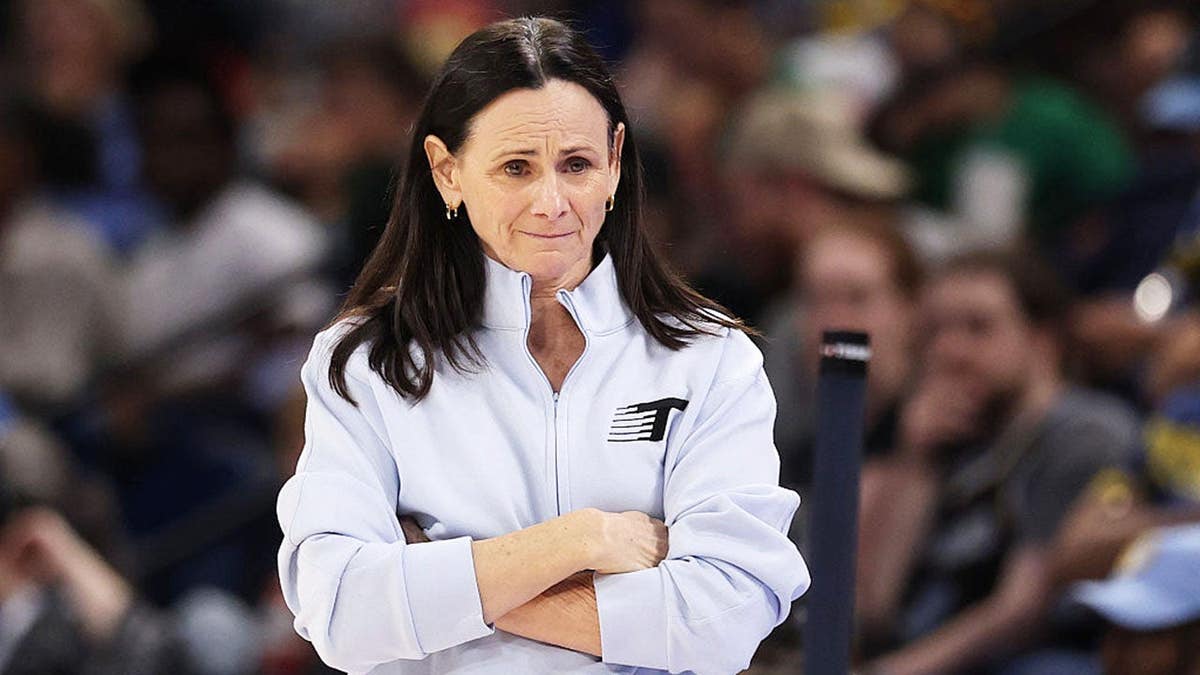
Toronto Tempo head coach Sandy Brondello called Angel Reese a “protected species” and Reese quickly used the opportunity to play the race card. (Michael Reaves/Reuters)
Everyone knows what happens to white women in that league who don’t lecture about “privilege” or explain that the WNBA was “built on the backs of Black women.”
So, who’s the real victim here? Is it Reese? Or is it Brondello, who apologized and still faced a one-game suspension without pay?
ANGEL REESE THANKS WNBA FOR SUSPENDING SANDY BRONDELLO, FRAMES ‘PROTECTED SPECIES’ COMMENT AS DISCRIMINATION
The fact that Brondello received a one-game suspension, the same punishment Alyssa Thomas received for driving her fist into Caitlin Clark’s throat, for calling Reese a “protected species” only proved her point.
The WNBA believes a reckless physical attack on a white star player deserves the same punishment as an alleged word crime against a Black one and that paints the league’s priorities pretty clearly.
Internet trolls don’t only target Angel Reese
Before getting to the rest of Reese’s victimhood résumé, let’s address the most common defense.
Yes, Reese receives nasty messages online.
Someone created fake, sexually explicit AI images of her when she was 21 years old. That’s disgusting and there’s no defense for it.
But Reese and several other WNBA players often discuss online abuse as though Black women are the only people who experience it.
They aren’t. Not even close.
It happens to virtually everyone who spends any time in the public spotlight.
I’m a relatively unknown sports reporter, and even I get plenty of it.
After I criticized Reese, people called me racist, referred to me as “white boy” or “cracker,” told me to drink bleach, insulted my wife and mother and called me fat.
Does that make the messages acceptable?
No.
Does it mean I’m oppressed?
Also no.
It means social media is full of deranged people who say horrible things to strangers. The goal is to get under people’s skin. I’m not including my own experience to elicit sympathy.
I’m a grown man. I can take the online abuse from trolls because, ultimately, I don’t care what strangers or bots think about me. I’m just trying to prove a point that Reese is not unique. At all.
Fame, popularity and money come with obvious benefits. They also come with scrutiny, criticism and social media trolling.
Reese could quit basketball. She could stop modeling, podcasting and posting her life online. She could get a normal job and the mean tweets would dry up quickly.
I suspect she has no intention of doing that because the money and attention are worth the downside.
That’s a reasonable choice. Most people would make the same one.
But Reese wants to enjoy every benefit of celebrity while treating its predictable drawbacks as evidence that she has been uniquely targeted by society.
She hasn’t.
Reese made criticism of her Caitlin Clark taunt about her identity
Reese’s victim narrative really took off after LSU defeated Iowa in the 2023 national championship game.
During the final moments, Reese followed Clark around the court while repeatedly performing John Cena’s “you can’t see me” gesture and pointing to her ring finger.
Some people thought the extended taunt was excessive.
Others defended Reese by noting that Clark had used a similar gesture earlier in the tournament, albeit under different circumstances.
That was a fair sports debate, but Reese predictably turned it into something else.
“All year, I was critiqued for who I was,” she said. “I don’t fit the narrative. I don’t fit the box that y’all want me to be in. I’m too hood. I’m too ghetto…. When other people do it, y’all don’t say nothing.”
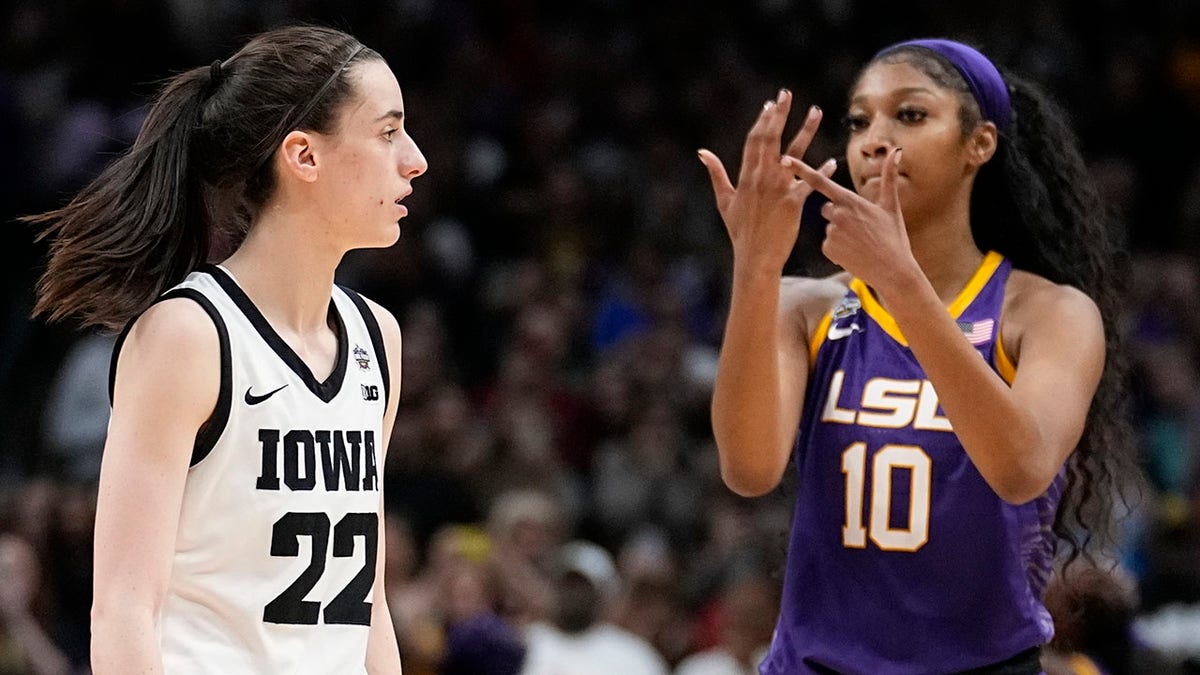
Angel Reese taunted Caitlin Clark during the 2023 Women’s National Championship. (AP Photo/Tony Gutierrez, File)
This is probably where Reese discovered that playing the race card would be an invaluable tool for her career. Even though Reese followed Clark around during the final seconds of the national championship game and taunted her, she claimed criticism was because she’s Black.
Reese had found the formula she would continue using: do something provocative, enjoy the attention and then treat criticism as an attack on her race.
It worked.
The WNBA investigated alleged racism against Reese and found no evidence
One of the most ridiculous examples came during the opening weekend of the 2025 WNBA season.
Following a game between the Chicago Sky and Indiana Fever, the league announced that it was investigating allegations of “hateful fan comments” directed at Reese.
There was no publicly released video or audio.
No fan was identified, and no public witness corroborated the allegation.
That didn’t stop ESPN personalities and other members of the sports media from treating the alleged racist incident as a proven fact.
Reese didn’t urge anyone to wait for the investigation, either.
“Obviously, there’s no place in this league for that,” Reese said. “Obviously, this has been going on for a while now.”
Except it wasn’t obvious that anything had happened during that game.
That was why the WNBA was investigating.
The league interviewed relevant people and reviewed audio and video from the arena.
It could not substantiate the allegation.
That doesn’t prove no one among thousands of fans said something offensive. It does mean the league looked for evidence and failed to find it.
Fever fans were smeared as racists anyway.
Reese received the sympathy she constantly seeks.
When the investigation came up empty, Reese didn’t apologize to Fever fans. Neither did the media figures who had treated the allegation as fact.
Reese turned a question outside the team hotel into ‘harassment’
The Fever incident wasn’t the first time Reese turned a questionable encounter into a much bigger story.
In June 2024, a man approached then-Chicago Sky teammate Chennedy Carter outside the Sky’s hotel in Washington and asked whether she had contacted Caitlin Clark after delivering a cheap shot to her days earlier.
Reese immediately framed the encounter as something much more serious.
“Finding out our team’s hotel to pull up with a camera as we get off the bus and put it in my teammate’s face and harass her is nasty work,” Reese wrote. “This really is outta control and needs to stop.”
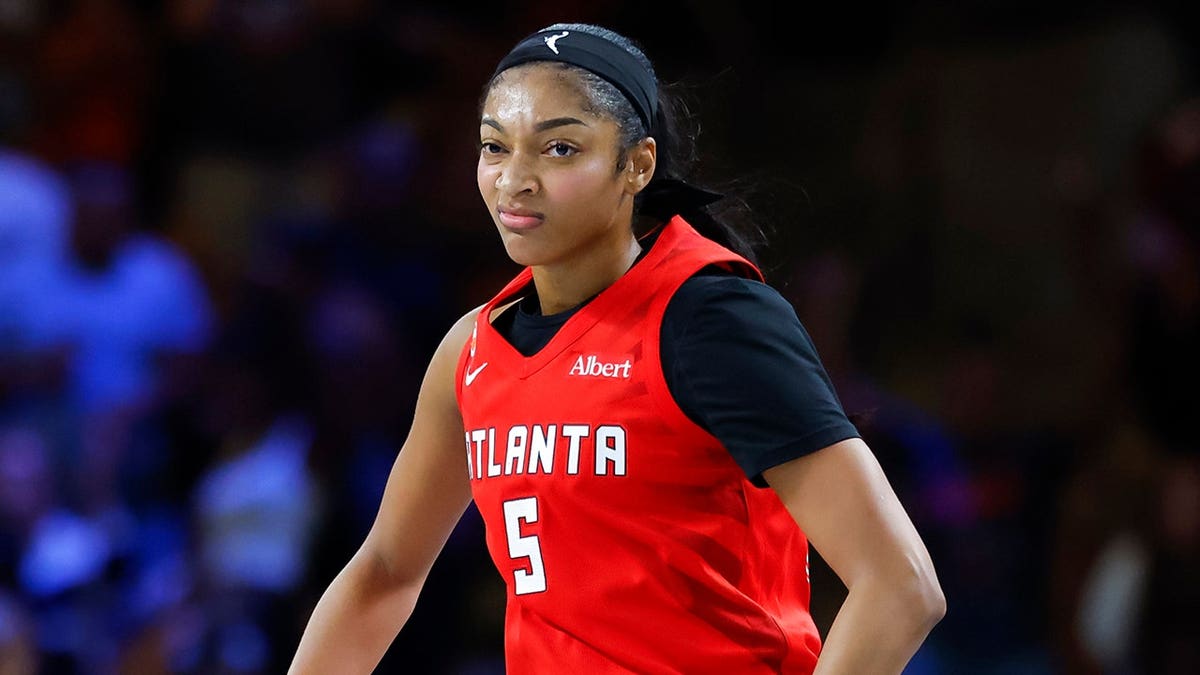
Angel Reese consistently paints herself as a victim. (Todd Kirkland/Reuters)
The video that surfaced showed the man asking Carter a question before team security stepped between them. He didn’t touch Carter or threaten her.
Sky forward Michaela Onyenwere later claimed the video omitted the man using slurs and calling players “ghetto bitches.” The team’s general manager backed up the claim that expletives were used.
But Reese made it sound like someone had tracked down the team and created a dangerous situation. In reality, a man with a camera asked Carter about the biggest story in women’s basketball and was quickly moved away by security, without any need for law enforcement to intervene.
One year later, Reese said she had “never had a negative encounter in person, ever.”
Apparently, the hotel harassment no longer counted.
Reese blamed Caitlin Clark’s fans for racism, death threats and stalking
Reese launched her “Unapologetically Angel” podcast in September 2024.
Naturally, the first episode featured an extended discussion about Caitlin Clark.
That was interesting because Reese had previously pushed back against the idea that Clark was responsible for the explosion in WNBA popularity.
Apparently, Clark was important enough to help launch Reese’s podcast.
During the episode, Reese said she didn’t hate Clark and didn’t believe Clark personally endorsed racist behavior.
Then she accused Clark’s supporters of racism, death threats, circulating fake nude images to her family and following her home.
“It’s really just the fans,” Reese said. “Her fans, the Iowa fans, now the Indiana fans… I think there’s a lot of racism when it comes to it.”
Those are serious accusations.
The fake images existed. That part was documented.
But Reese never publicly showed that Clark’s fans created them or sent them to her family.
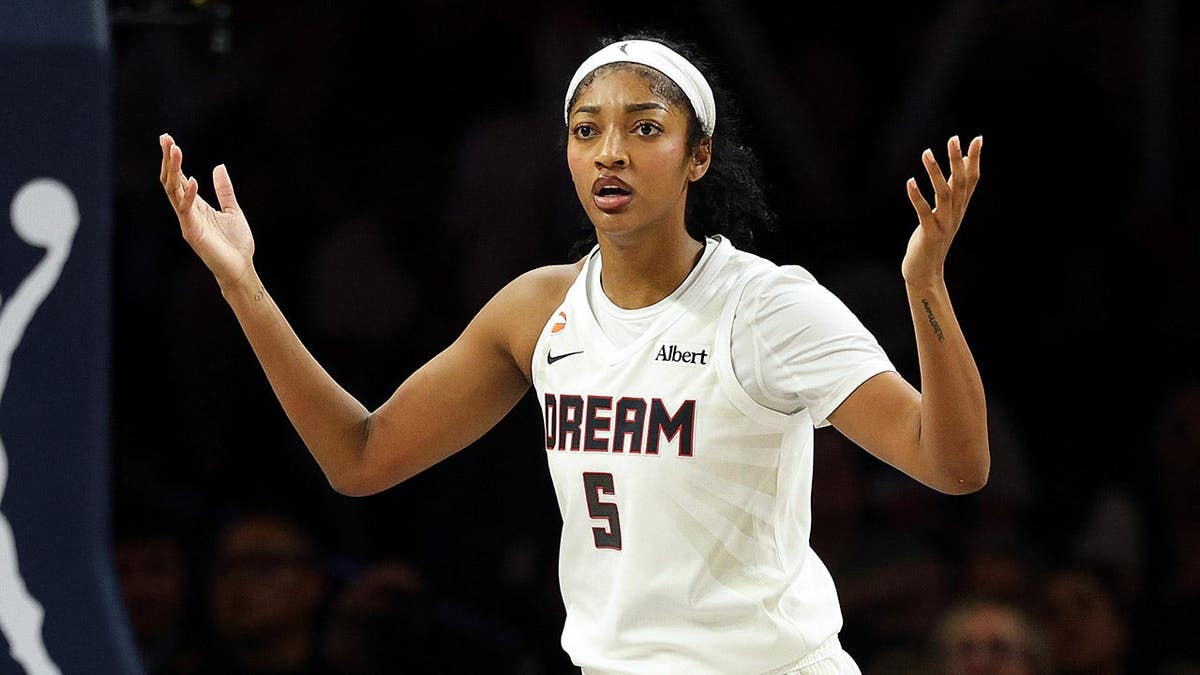
Angel Reese turned Sandy Brondello’s common Australian sports phrase into a racial controversy, and it’s not the first time she’s used a similar playbook. (David Berding/Getty Images)
How did she know the alleged stalkers supported Clark?
Was the stalking reported to police?
How did she determine the alleged threats were racially motivated?
Reese never provided those answers.
Maybe she has evidence she hasn’t made public. That’s possible.
But when someone publicly accuses an enormous group of people of racism, stalking and death threats, asking for evidence isn’t unreasonable.
Reese simply made the allegation and expected everyone else to accept it.
Anyone who questioned the claim risked becoming another example of the racism she was describing.
That’s a very useful arrangement.
For what it’s worth, at least three prominent women’s basketball players have had alleged stalkers arrested or charged: Caitlin Clark, Sophie Cunningham and Paige Bueckers.
Reese hit Clark in the head and blamed the officials
During a June 2024 game against Indiana, Reese hit Clark in the head while attempting to block her shot.
Officials reviewed the play and upgraded the foul to a flagrant.
Clark dismissed it as a basketball play.
Reese was upset about the officiating.
“I guess some people got a special whistle,” she said after the loss.
Some people get a “special whistle”? Isn’t that exactly the claim that got Brondello suspended for a game? It was fine when Reese said it about Clark, but crossed the line when the same sentiment was directed at Reese.
Reese likes to talk about double standards, and we’ll get to that in a moment, but boy, that seems like a pretty clear one right there.
Reese says reporters twist her words, even when everyone can hear them
Reese has repeatedly said she doesn’t trust the media.
During her rookie season, Chicago Sun-Times columnist Steve Greenberg tried to interview her about her life away from basketball.
Reese mostly gave one- or two-word answers.
“I know how y’all like to twist my words, so I’m just keeping it short and sweet,” she said.
Greenberg reportedly told Reese he wouldn’t twist her words.
“I can’t trust any of y’all,” Reese responded.
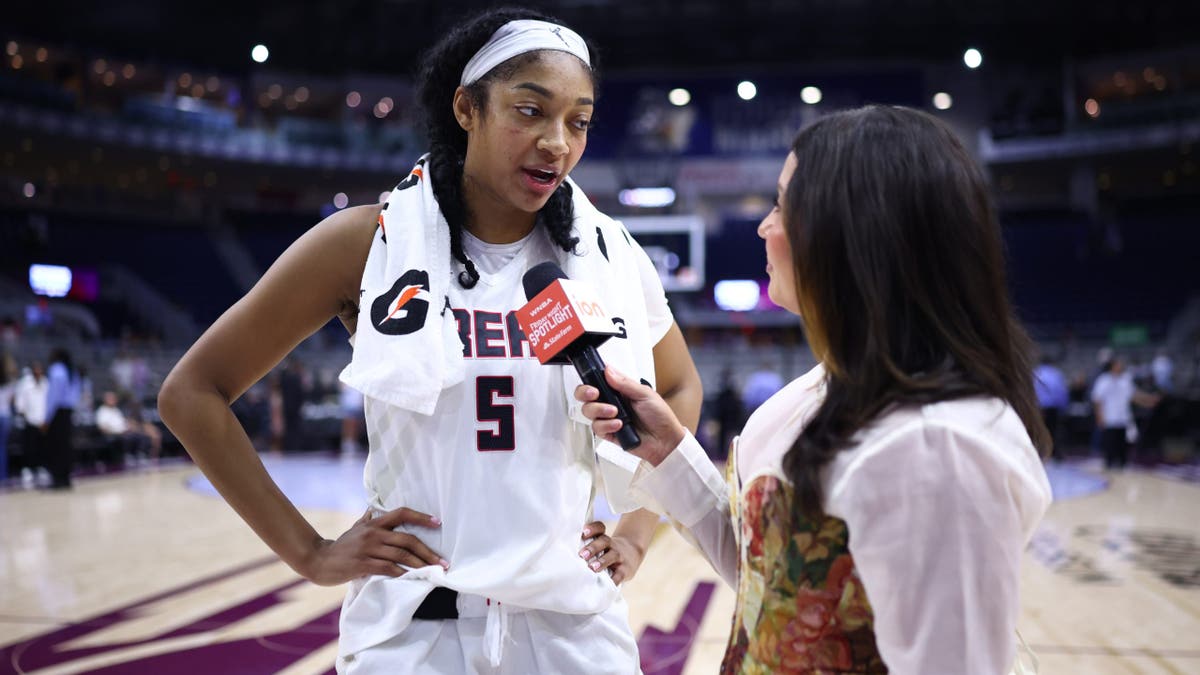
Angel Reese said talking to reporters is “really scary.” (Vaughn Ridley/NBAE via Getty Images)
She didn’t identify a false quote or explain what reporting prompted her accusation against every journalist.
Nearly all of Reese’s controversies come from her own comments captured on video or audio.
She said Clark gets a “special whistle.” She claimed that the WNBA wasn’t gaining popularity because of “one person.”
Reporters didn’t force Reese to accuse Clark’s fans of racism and stalking. Nor did they force her to say she “embraces being a villain,” which she definitely doesn’t embrace, by the way.
No journalist typed “ARE WE SURPRISED?!” on her social-media account.
Reese said those things.
When the reaction is positive, Reese embraces it.
But when people react negatively, someone must have twisted her words. As usual, it’s never her fault.
Reese says talking to reporters is ‘really scary’
By late 2025, Reese had gone from distrusting reporters to saying she was frightened of them.
“For me, the media is really scary,” Reese said on her podcast. “I’m scared to do stuff like that because I know how things could get flipped.”
She added that she would sometimes rather accept a fine than speak to reporters.
Reese repeated the complaint in 2026 during an appearance with Michelle Obama and Craig Robinson.
“The media has not always been great for me,” she said. “I’ll have a fine before I have to go to media and feel like my back is against the wall.”
There’s a fairly easy way to reduce the likelihood of being misquoted.
Speak clearly while cameras and audio recorders are running.
Reese is also perfectly willing to talk on her own podcast, where she controls the format and presentation.
She’s never been afraid to speak publicly.
She just doesn’t like losing control over how her comments are received.
Those are different problems.
Reese said the media profited from her pain
In September 2024, Reese accused the media of creating a villain narrative around her.
“For the past 2 years, the media has benefited from my pain & me being villainized to create a narrative,” Reese wrote. “They allowed this. This was beneficial to them.”
She wasn’t entirely wrong.
Media outlets benefited from the Clark-Reese rivalry.
OutKick did. ESPN did. The WNBA and its television partners certainly did.
Angel Reese benefited, too.
She became one of the most recognizable women’s basketball players in the country. She landed endorsement deals, launched a podcast, modeled and built a massive social-media following.
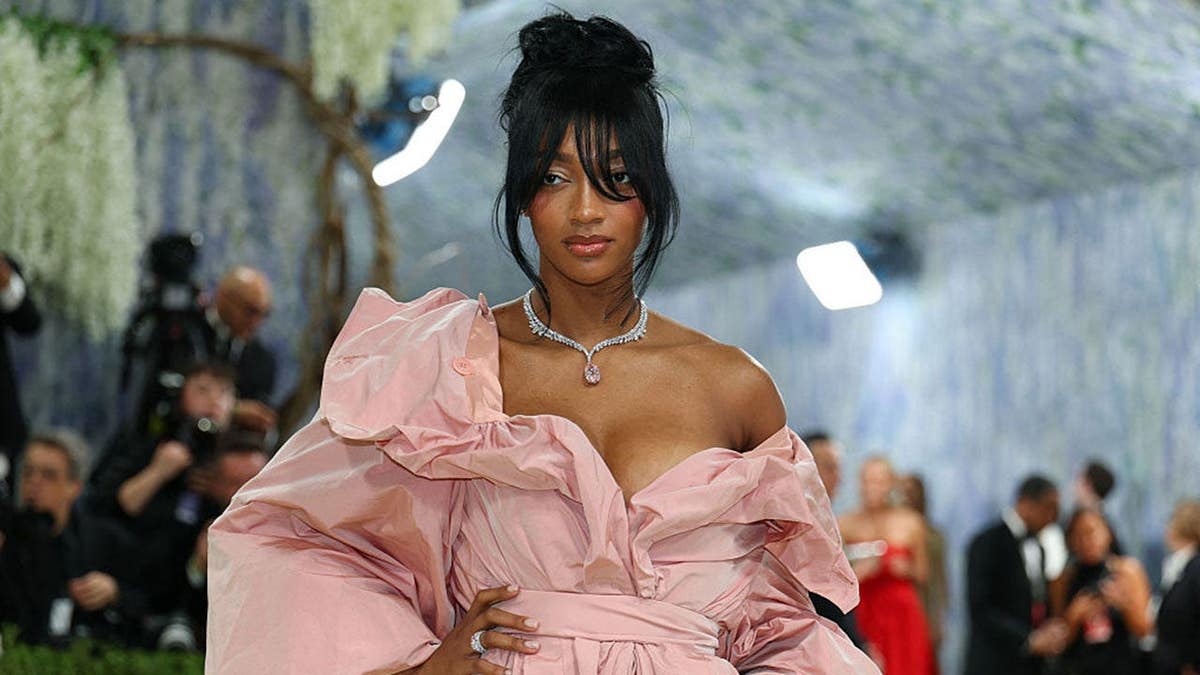
Angel Reese has built a pattern of claiming victimhood over racism from fans, media bias and referee treatment in the WNBA, from Caitlin Clark rivalries to the Sandy Brondello incident. (Angela Weiss/AFP)
Reese also embraced the villain role when it helped her brand.
She said she was willing to accept it “for the good of the game.”
Apparently, the villain persona belonged to Reese when it created opportunities.
When it brought criticism, suddenly her tune changed.
Reese used the LSU press conference to talk about everything she had endured
Following LSU’s loss to Iowa in the 2024 Elite Eight, Reese broke down during her postgame press conference.
“I’ve been through so much,” she said. “I’ve been attacked so many times. Death threats, I’ve been sexualized, I’ve been threatened.”
Again, the fake sexual images were real and disgusting.
Reese had every right to be furious about them.
But she combined that documented incident with broader claims about death threats and constant attacks without publicly identifying where they came from.
Maybe the threats were real. They probably were. Public figures receive sick messages all the time. I’ve had my share of threatening DMs and I’m nowhere near the status of Reese.
That’s the point Reese and her defenders regularly ignore.
Online abuse is not unique to Angel Reese. It is not unique to women’s basketball players or to Black celebrities.
It’s an unfortunate reality of being famous in the internet age.
Reese had millions of followers, major endorsement deals and a national platform.
She enjoyed opportunities that almost no college athlete in history had received.
Yet the overriding message of that press conference was how badly the world had treated Angel Reese.
There are many more examples
Honestly, we could go on for days about the number of times Reese has relished the opportunity to play the victim card, the race card or both.
In fact, there’s a good chance this article becomes another perfect opportunity for her to try and garner sympathy.
The truth is that being Angel Reese has worked out pretty well for Angel Reese.
She is a solid basketball player, although not elite, but she’s an excellent self-promoter.
ANGEL REESE GIVES ATLANTA DREAM REBOUNDS AND ATTENTION, BUT HER OFFENSE IS STILL A PROBLEM
She understands how to put herself in the middle of a story and keep that story going for as long as it serves her needs.
More often than not, she accomplishes this by portraying herself as the person everyone else has wronged.
The approach has made her famous and rich.
It has helped her land sponsorships, build a media platform and remain one of the most discussed players in the WNBA.
That doesn’t mean everything said about Reese is acceptable. It isn’t.
It does mean Reese has benefited enormously from the public attention she so often describes as a burden.
CLICK HERE FOR MORE SPORTS COVERAGE ON FOXNEWS.COM
She can keep the fame, money, endorsements and followers.
But she should probably stop pretending that the predictable downside of being a celebrity is evidence that she is uniquely persecuted.
Because she’s not.