

NEWYou can now listen to Fox News articles!
Two “forever chemicals” have been associated with a higher risk of aggressive breast cancer, according to research from the National Institutes of Health (NIH).
Forever chemicals, known as PFAS, are a group of synthetic chemicals that break down extremely slowly and can build up in the environment and the human body.
PFAS have been used in non-stick cookware, upholstery and clothing, as well as some food packaging and personal care items.
CANCER RISK MAY BE HIGHER FOR PEOPLE WITH ONE PARTICULAR TYPE OF JOB
The study, published in the Journal of Clinical Oncology, found that women with higher blood levels of two types of PFAS — perfluorooctanoic acid (PFOA) and perfluorooctanesulfonic acid (PFOS) — were more likely to develop estrogen receptor-negative (ER-negative) breast cancer.
ER-negative breast cancers tend to be “more aggressive” and have worse outcomes compared to breast cancers that respond to estrogen, according to a U.S. Department of Health and Human Services (HHS) press release.

Two “forever chemicals” have been associated with a higher risk of aggressive breast cancer, according to research from the National Institutes of Health. (iStock)
Data was drawn from a large U.S. research project called the Sister Study, which investigated environmental and genetic factors related to breast cancer. All participants had a sister diagnosed with breast cancer at enrollment but did not have breast cancer themselves.
Researchers measured 17 PFAS in blood samples collected before diagnosis from 1,609 women who later developed breast cancer and a comparison sample of 2,269 women, then examined links between PFAS levels and breast cancer risk by tumor type.
EATING LESS OF COMMON INGREDIENT EARLY IN LIFE MAY SLASH CANCER RISK DECADES LATER
The highest PFOA exposure group had a 67% higher rate of ER-negative breast cancer. The rate was 93% higher in the highest PFOS group compared to those in the lowest group. These figures represent relative differences between groups, not an individual woman’s chance of developing breast cancer.
“This study … provides evidence that two PFAS are related to a higher ER-negative breast cancer risk.”
The researchers found no clear association between PFOA or PFOS and breast cancer overall.
“This study, along with the accompanying meta-analysis of previous studies, provides evidence that two PFAS are related to a higher ER-negative breast cancer risk,” study leader Alexandra White, Ph.D., a researcher at the National Institutes of Health, told Fox News Digital.

Forever chemicals, known as PFAS, are a group of human-made synthetic chemicals that break down extremely slowly and can build up in the environment and the human body. (iStock)
As this study focused mainly on older PFAS chemicals that have been largely phased out, the researcher said experts know “very little” about the PFAS that are replacing them, which could serve as a limitation.
MICROPLASTICS DETECTED IN MOST HEART ATTACK PATIENTS’ BLOOD IN STARTLING NEW STUDY
“They tend to be shorter-chain compounds and may be less persistent in our bodies and the environment, but we know little about how they may influence health outcomes, such as breast cancer,” she said.
The findings show an association, not proof of causation, between forever chemical exposure and breast cancer risk, as the authors noted that more research is needed.
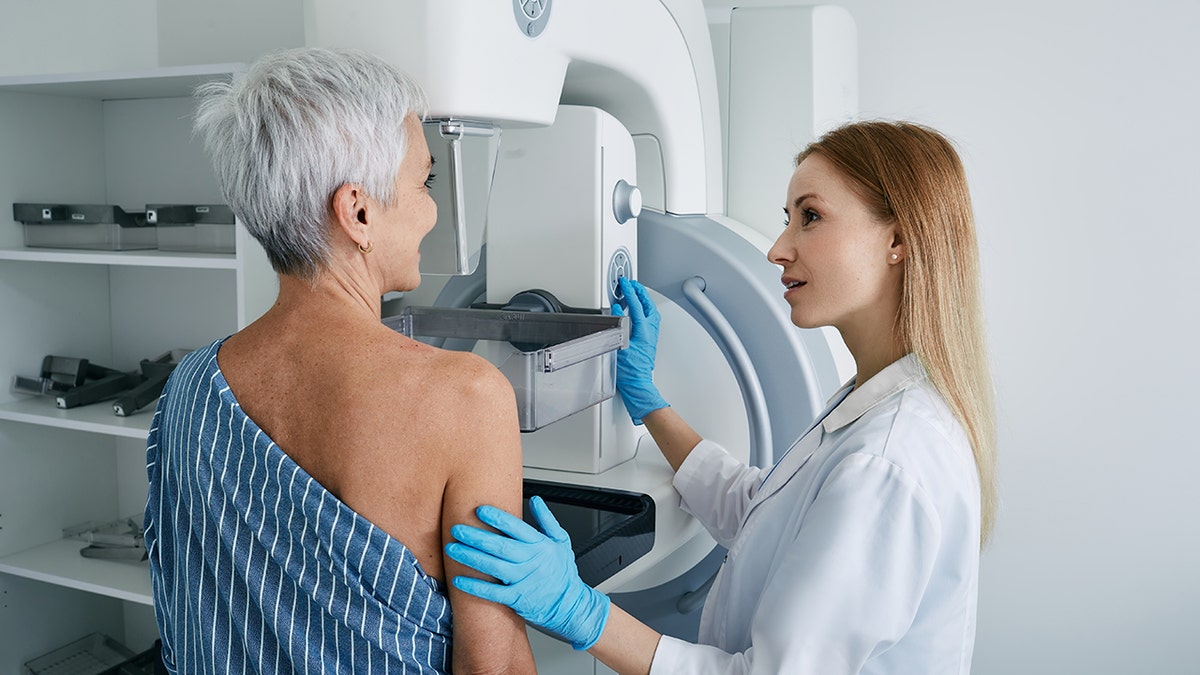
ER-negative breast cancers tend to be more aggressive and have worse outcomes compared to breast cancers that respond to estrogen hormones, according to the HHS. (iStock)
HHS Secretary Robert F. Kennedy Jr. said that “women deserve clear answers about how chemicals in their environment may affect their health,” calling for further investigation.
CLICK HERE TO SIGN UP FOR OUR HEALTH NEWSLETTER
“Under President Trump’s leadership, we will pursue the evidence, confront environmental health risks and give women the information they need to protect their health,” he said.
Medical oncologist Dr. Tiffany Troso-Sandoval, a New York City-based breast and gynecological cancer specialist who worked at Memorial Sloan Kettering for more than 25 years, also acknowledged that forever chemicals can increase cancer risk.

Few risk factors beyond genetic predispositions are known for ER-negative breast cancer, a doctor said. (iStock)
“Oftentimes, once you’ve been exposed to them, they will accumulate in your body and cause havoc, and can actually increase the risk of carcinogenic transformation of cells,” she told Fox News Digital. “What was interesting about this study is that the link was found only in ER-negative breast cancers, which is a known aggressive subtype of cancer.”
Few risk factors beyond genetic predispositions are known for ER-negative breast cancer, Troso-Sandoval noted, adding that “the study did not show that it increased the risk of all breast cancers in general.”
TEST YOURSELF WITH OUR LATEST LIFESTYLE QUIZ
She suggested PFAS might damage DNA or interfere with the body’s ability to repair that damage or destroy cancerous cells.
While patients with ER-negative breast cancer had higher levels of these compounds in their bodies, that does not prove the chemicals caused their cancers, according to Troso-Sandoval.
Reducing PFAS exposure
First author Che-Jung Chang, Ph.D., a former research fellow at NIH and a current researcher at DLH, noted that although PFAS are “persistent” in the environment and in the human body, exposure is “potentially modifiable.”
CLICK HERE TO DOWNLOAD THE FOX NEWS APP
“People can take steps to reduce their exposure, and these findings could open new avenues for prevention,” she said.

One doctor recommended considering cooking with stainless steel pots and pans. (iStock)
Troso-Sandoval recommends reviewing everyday sources of exposure to PFAS and other potentially harmful chemicals, including the following.
- Drinking water
- Cookware and utensils
- Cosmetics and personal care products
Her concerns about black plastic utensils involve other chemical contaminants, including flame retardants.
CLICK HERE FOR MORE HEALTH STORIES
“Try to look at the products that you are using very frequently, and those are the first ones to swap out,” she advised. “Maybe consider cooking with stainless steel pots and pans … I recommend not heating up any food in plastic containers, because as you heat these plastics, they tend to leach more of the compounds into our foods.”
She recommends reviewing cosmetics and personal care products that may contain some of these compounds.