What Fauci’s Secret Diaries Reveal | Will Cain Country
Guest Host Kayce Smith and Tim Young break down the wild leaks from Dr. Anthony Fauci’s secret diaries. Plus, Sophie Cunningham’s sold-out shoes, President Obama’s advice to Caitlin Clark, and Gen Z’s cursive literacy fail.
Three years into Caitlin Clark’s WNBA career, the conversation has never been less centered on basketball.
USA Today is now analogizing her playing style to the lynching of Emmett Till in 1941. Even the rare discussions about her on-court performance are increasingly driven by culture-war motivations, including dishonest claims that she isn’t even a top-10 guard in the league.
At this point, there’s reason to wonder when and if the WNBA can move past the nastiness and racial hysteria that have defined the past few seasons.
To address the problem, those involved must first acknowledge the problem. And while no one side deserves all the blame, the drama tends to follow a similar pattern.
It goes like this:
- Someone slights Caitlin Clark, whether by hard-fouling her, smearing her, omitting her from promotional graphics, or downplaying her popularity as the product of “Great White Hope” narratives.
- Her fans respond by pointing out what they see as hypocrisy, bias or racially charged treatment.
- The media and/or players accuse Clark’s fans of harassing the people who slighted her.
Rinse and repeat.
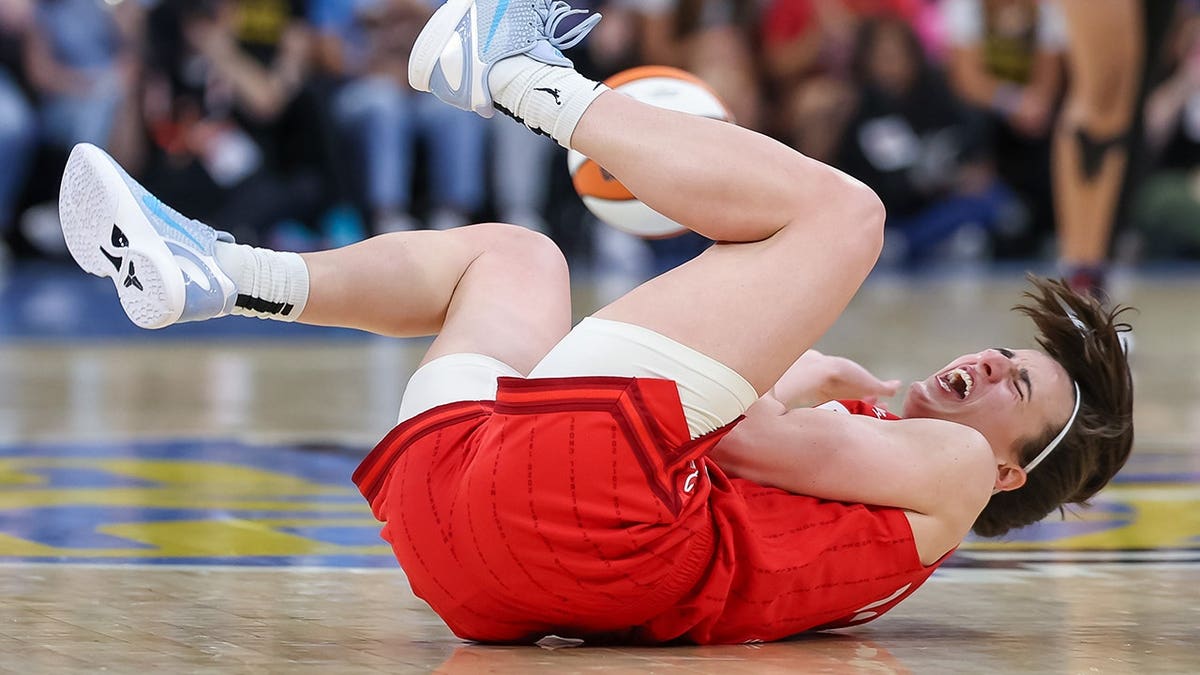
Caitlin Clark No. 22 of the Indiana Fever reacts after a flagrant foul by Diamond DeShields No. 0 of the Chicago Sky at Wintrust Arena in Chicago, Ill., on Aug. 30, 2024. (Getty Images)
MONICA MCNUTT IS TRYING TO BECOME THE FEMALE RYAN CLARK WITH LATEST CAITLIN CLARK SMEAR
The cycle played out over the last week. After USA Today likened Clark’s on-court “flopping” to the lynching of Black people and then published a false story about why she missed an All-Star event, ESPN analyst Monica McNutt accused Clark of lacking “accountability” and “self-awareness.”
According to McNutt’s logic, it’s somehow Clark’s fault that players keep driving fists into her throat and posting ugly messages about her on social media.
It’s probably also Clark’s fault that Chicago Sky guard DiJonai Carrington is spiraling on X, accusing her ex-girlfriend of cheating on her with multiple women around the WNBA.
Of course, McNutt and those who share her worldview don’t believe they’re the problem. They continue to blame White people for using Clark as an avatar to hate Black lesbian women. Last year, McNutt even suggested that young White girls rooted for Clark because of racial bias.
There is nothing Clark can do to defuse the animosity. She publicly pretended to acknowledge her “white privilege” at the end of her rookie season and even spent time with former President Barack Obama during All-Star Weekend. It changed nothing. The Mean Girls in the WNBA and the media still despise her.
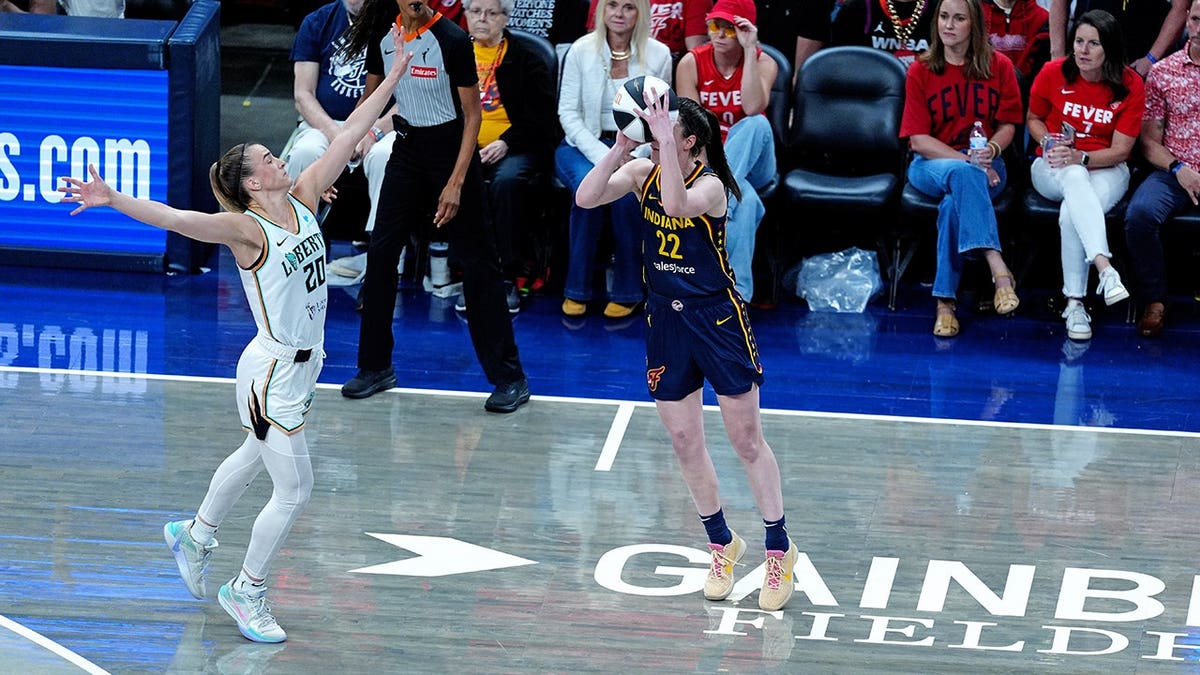
Caitlin Clark, who is famous for her long three-pointers, isn’t participating in the WNBA 3-Point Contest prior to the 2026 All-Star Game. (Icon Sportswire via Getty Images)
Likewise, her fans aren’t going to stop defending her when the verbal and physical attacks against her remain so blatant. And why would they make peace with players and pundits who routinely dismiss them as racists?
“We would all be very naive if we didn’t say race and her sexuality played a role in (Clark’s) popularity,” Jemele Hill told the Los Angeles Times.
Last month, Hill again blamed criticism of other players on — what else? — racism.
“So much of this Caitlin Clark discourse is absolutely rooted in hatred or dislike of Black women,” she claimed on Threads.
Or maybe Clark’s fans simply want her to be officiated and treated like every other player, regardless of race or sexuality.
NASTY WNBA PLAYER PLAYS VICTIM CARD AFTER MULTIPLE ISSUES, FIRES OFF CRINGE TWEET
Caitlin Clark Derangement Syndrome (CCDS) runs too deep to expect these narratives to disappear in the near term. There’s also too much invested in them for the race idolaters to concede any ground in the culture war.
And, frankly, we’re not exactly dealing with the most reasonable or emotionally stable voices when it comes to Monica McNutt, Angel Reese, Nancy Armour and others. We put Jemele Hill in a different category. She knows exactly what she’s doing. She is pandering to a very low-IQ, deeply anti-White audience.
We’re not saying this level of hysteria will last throughout Clark’s entire career. But it’s not fading. If anything, it’s escalating.
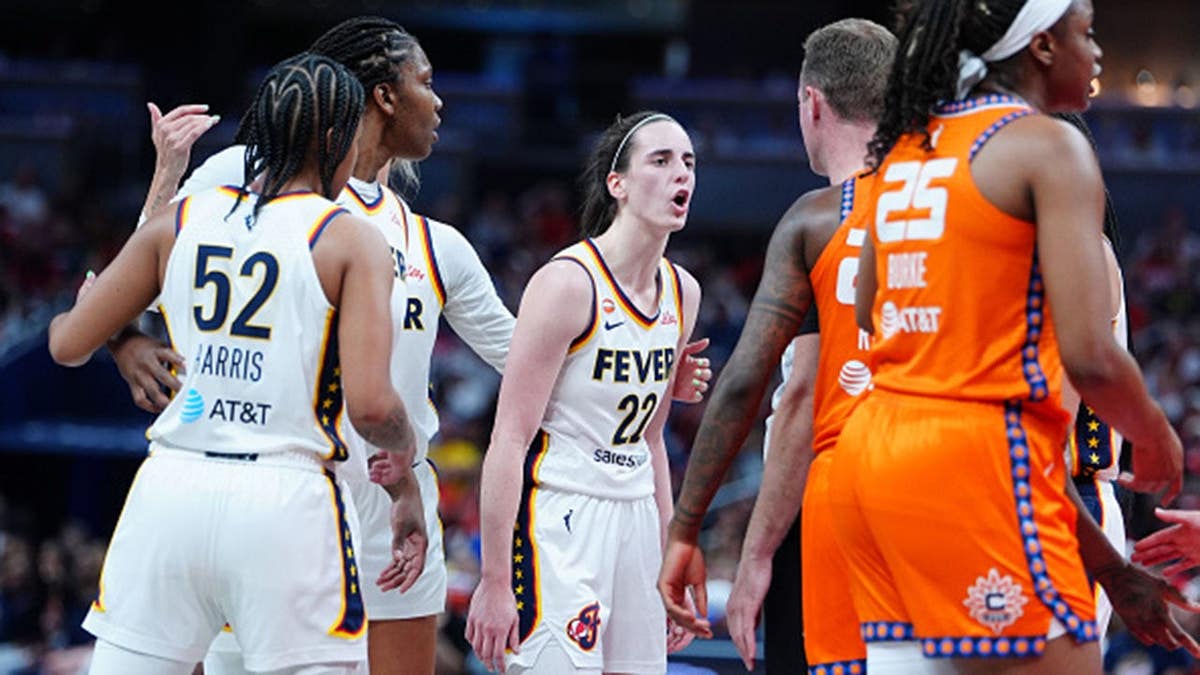
A referee steps between Indiana Fever guard Caitlin Clark and Connecticut Sun guard Saniya Rivers as they exchange words on July 22, 2026, at Gainbridge Fieldhouse in Indianapolis, Ind. (Icon Sportswire via Getty Images)
It’s hardly far-fetched to think that one day a player will seriously injure Clark. If/when that happens, the likes of McNutt will almost certainly defend the player responsible – and then accuse Clark’s fans of racism for noticing.
This is the product of a society that has spent years encouraging racial division and teaching young Black Americans that the success of their White counterparts is primarily the result of their exploitation.
That is, of course, a lie. Had the women in the league not responded to Clark’s arrival like jealous, bitter brats, they could have ridden her wave to stardom.
That’s how sports work.
CLICK HERE TO DOWNLOAD THE FOX NEWS APP
A generational superstar elevates everyone around them by bringing new fans into the sport. Sophie Cunningham is one of the few WNBA players who understood that, using Clark’s popularity to establish herself as a cultural force. Most of the other players used their moment in the spotlight to present themselves as entitled, wannabe victims.
The WNBA had so much potential. And yet, the league is in danger of squandering it because too many of its players and too much of the media can’t focus on basketball while a straight White woman from Iowa is starring in the league.