NEWYou can now listen to Fox News articles!
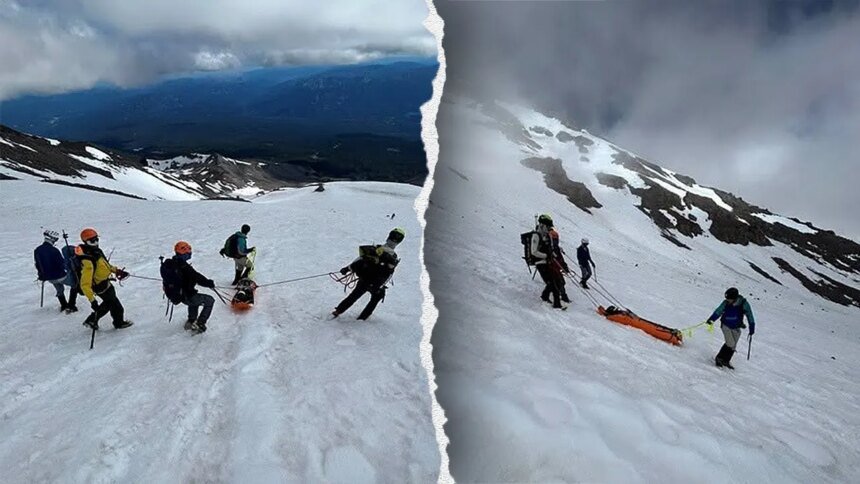
A 31-year-old novice climber survived a roughly 1,500-foot slide down California’s Mount Shasta after worsening weather forced rescuers to abandon plans for a direct helicopter rescue, sending climbing rangers scrambling up the mountain on foot before she could be flown to a hospital.
The woman was climbing the Left of Heart variation of the popular Avalanche Gulch route Sunday with two other novice climbers when she slipped near the 13,000-foot elevation and ultimately came to rest roughly 1,500 vertical feet lower, according to the U.S. Forest Service.
Cloud cover prevented a California Highway Patrol helicopter from reaching the injured climber directly, forcing the rescue to unfold in stages.
RESCUERS FREE CLIMBER TRAPPED BENEATH 16,000-POUND BOULDER ON OREGON’S MOUNT HOOD IN COMPLEX OPERATION
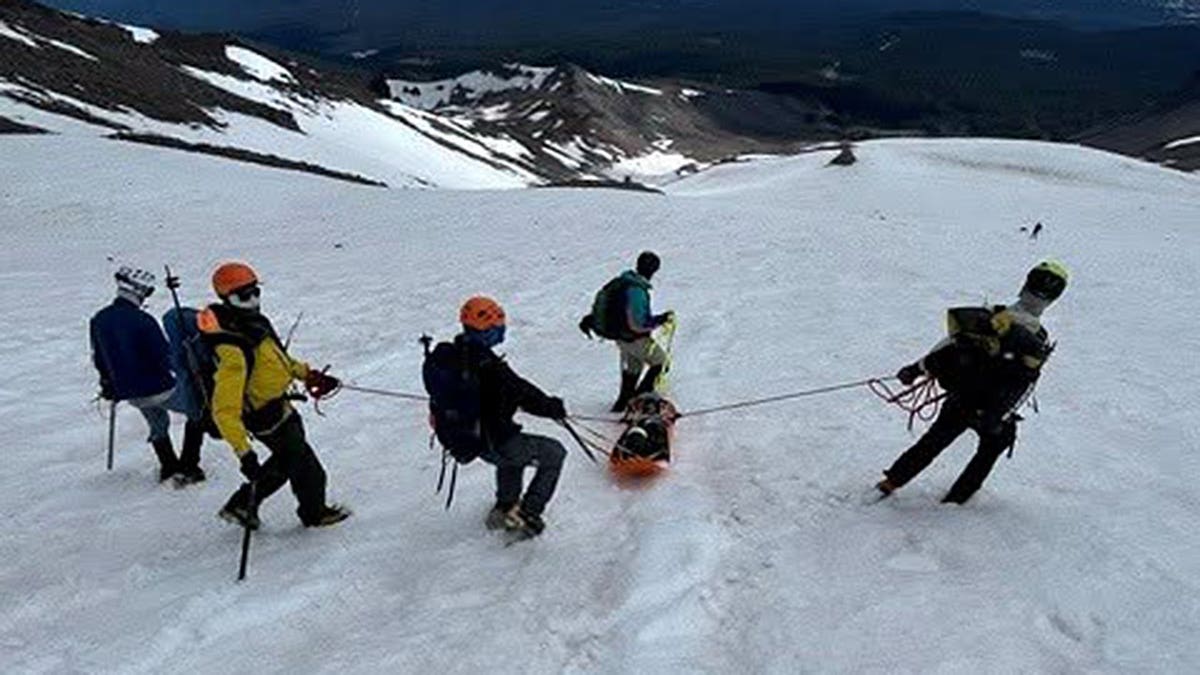
Climbing rangers and rescuers transport an injured climber across Mount Shasta after she slid about 1,500 vertical feet during an ascent. (U.S. Forest Service / Mount Shasta Climbing Rangers via Facebook)
“The weather complicated the issue,” a California Highway Patrol Office of Air Operations official with the Redding Air Unit told Fox News Digital.
Unable to reach the woman, the helicopter instead dropped U.S. Forest Service climbing rangers lower on Mount Shasta, where they hiked to the patient while the air crew waited for weather conditions to improve.
Once rangers stabilized the climber, they carefully lowered her by rescue litter to Lake Helen, where a CHP helicopter was finally able to land and fly her to Mercy Medical Center Mount Shasta at approximately 5:37 p.m.
RESCUERS FREE CLIMBER TRAPPED BENEATH 16,000-POUND BOULDER ON OREGON’S MOUNT HOOD IN COMPLEX OPERATION
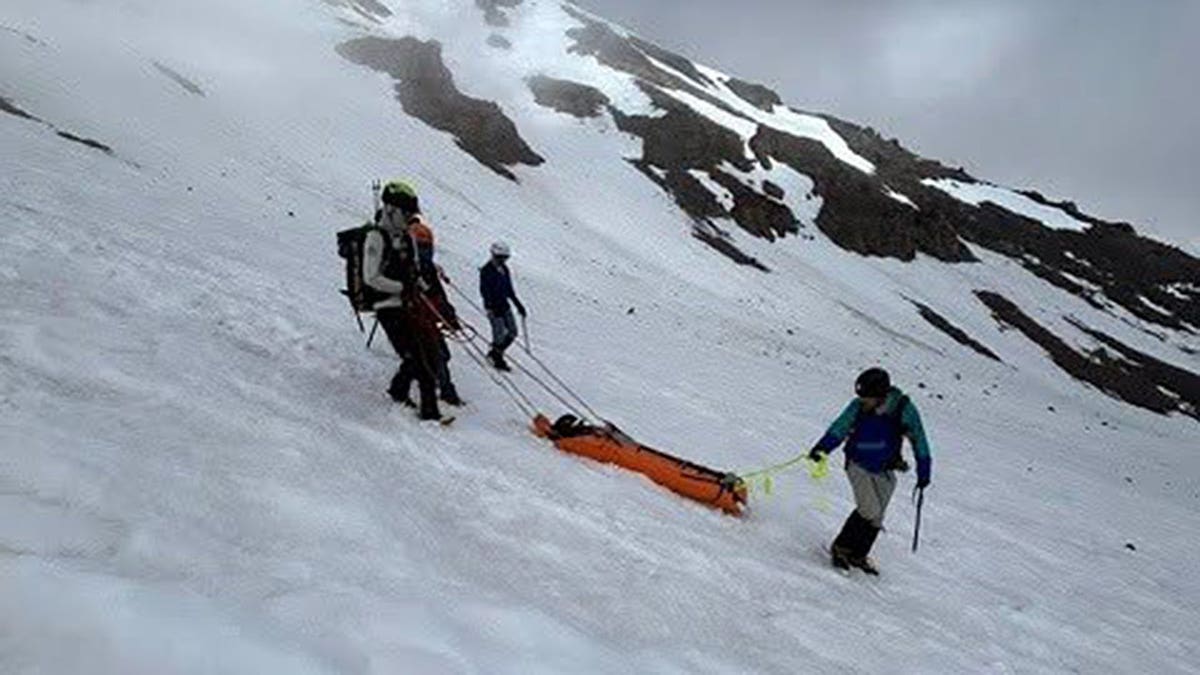
U.S. Forest Service climbing rangers lower an injured climber down Mount Shasta after she slid about 1,500 vertical feet on the Avalanche Gulch route Sunday. Cloud cover prevented an immediate helicopter rescue. (U.S. Forest Service / Mount Shasta Climbing Rangers via Facebook)
The rescue took roughly five and a half hours from the initial emergency call until the helicopter evacuation.
Although the distance sounds extraordinary, Shasta-Trinity National Forest officials said the incident was not a straight free fall.
Stokesbury said the climber’s descent was a long slide down the steep snow slope rather than a straight free fall, with the terrain gradually becoming less steep farther down the mountain.
RESCUERS FREE CLIMBER TRAPPED BENEATH 16,000-POUND BOULDER ON OREGON’S MOUNT HOOD IN COMPLEX OPERATION
“It starts steep and then kind of levels out a little bit,” Stokesbury told Fox News Digital. “It does enough for them to stop.”
Officials said climbers are taught to perform a self-arrest with an ice axe after slipping, but novice climbers often struggle to execute the maneuver before picking up speed.
The woman suffered a suspected fractured ankle along with additional injuries but remained alert and in good spirits when rescuers reached her, according to the Forest Service.
A CHP aviation official also described the terrain as particularly unforgiving.
“That particular portion of the mountain is extremely steep and it kind of funnels into a little bit of a chute,” the official told Fox News Digital. “People take a smaller slide on the upper end, there’s nothing to really arrest that descent for quite a while.”
Forest Service officials said the incident follows a familiar pattern seen during the latter part of Mount Shasta’s climbing season.
“Slips and falls happen all the time at that level,” Stokesbury said, adding that April, May and early June generally provide the safest climbing conditions.
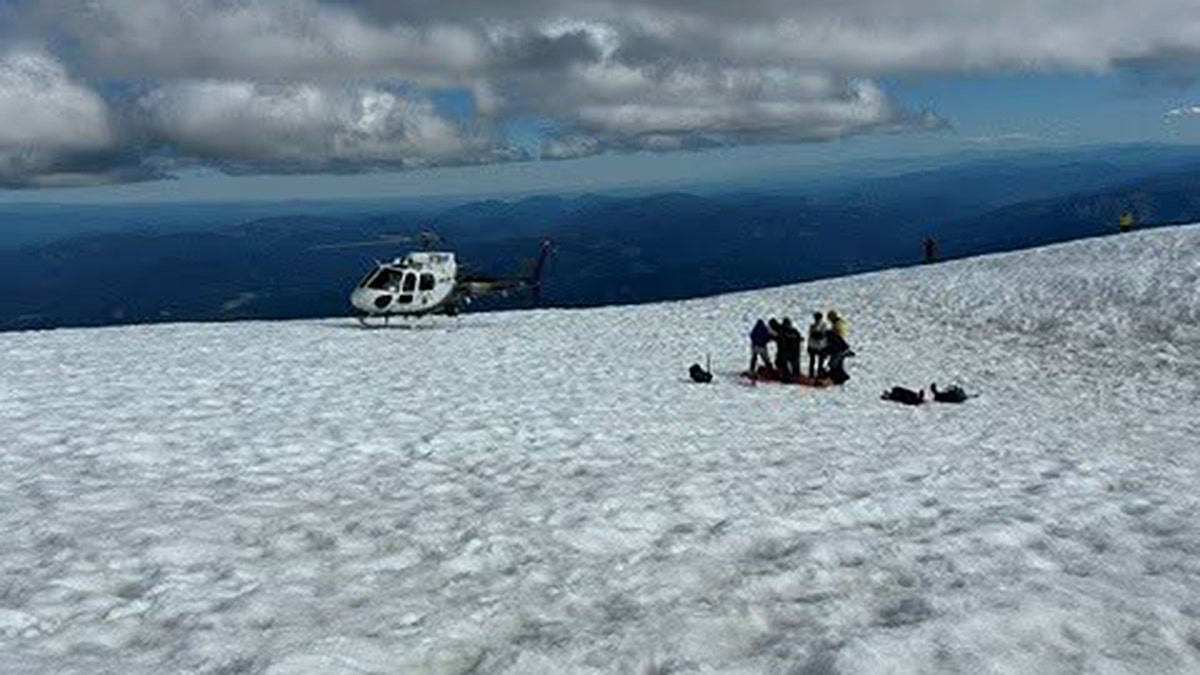
A California Highway Patrol helicopter prepares to evacuate an injured climber from Mount Shasta after weather delayed an earlier air rescue attempt. (U.S. Forest Service / Mount Shasta Climbing Rangers via Facebook)
As summer arrives, snow begins melting, ice hardens and rocks loosen, increasing the risk of falls and rockfall.
“This is not a normal hiking trail,” Stokesbury said. “You need to make sure you’re in shape, you have your proper gear.”
The Forest Service urges climbers to carry mountaineering equipment including an ice axe and crampons when conditions require, monitor changing weather and route conditions, climb with experienced partners and have an emergency plan before attempting the 14,179-foot volcano.
CLICK HERE TO DOWNLOAD THE FOX NEWS APP
“Before attempting a summit, be honest about your experience and physical conditioning,” the U.S. Forest Service’s Facebook post reads.
The rescue was carried out by Mount Shasta’s specialized climbing ranger program, which spends each climbing season educating visitors, monitoring mountain conditions and responding to emergencies on one of the nation’s busiest high-altitude climbing routes.